
What to Do After a Rollover Crash in Florida
A rollover crash in Florida can turn a normal drive into a scene that feels upside down in every sense. According to the National Highway Traffic Safety Administration, these incidents are uniquely dangerous due to the high risk of occupant ejection and severe impact forces.
In Florida, the first minutes matter. Your choices can shape your safety, your medical care, and the insurance claim that follows.
If you are shaken, that is normal. The safest move is to slow the moment down and handle the basics in order.
Key Takeaways
- Prioritize safety first: After a rollover, check for life-threatening hazards like fire or fuel leaks, call 911 immediately, and remain in your vehicle unless staying is dangerous to avoid secondary impacts.
- Seek immediate medical evaluation: Adrenaline can mask severe injuries such as traumatic brain trauma or spinal cord damage, so see a doctor the same day even if you feel fine.
- Document everything at the scene: Capture photos of the vehicle, road conditions, debris, and injuries before the scene is cleared, and collect contact details from any witnesses.
- Handle insurance with caution: Provide only factual details when reporting the crash to your insurer, avoid guessing about fault, and be careful before signing any recorded statements or authorizing vehicle repairs.
Put safety first and call 911
If your vehicle ends up on its side or roof, first check the accident scene for fire, smoke, fuel leaks, or oncoming traffic danger. Call 911 immediately, even if your injuries seem minor. The Florida Highway Patrol or local emergency responders will need precise details to reach you quickly.
- Tell dispatch exactly where you are, including the road name, nearest exit, mile marker, or major landmark.
- Report how many people are in the car and whether anyone is trapped, bleeding, or unconscious.
- If you can move safely, get away from traffic and wait for emergency responders.
- Do not move an injured person unless there is a fire, smoke, or another immediate, life-threatening danger.
A second impact can be just as dangerous as the initial crash. If the roof has caved in or the doors are jammed, stay buckled until rescue crews tell you it is safe to move. It is critical to stay restrained, as unbuckling prematurely significantly increases the risk of ejection from vehicle during a rollover. Additionally, a hard pull on a sore neck or spine can make internal injuries worse. Keep your communication brief and save your energy for the questions that matter.
Once the scene settles, stay alert for any changing pain, dizziness, or confusion. These symptoms may not appear immediately, but they are vital to report to medical professionals later.
Get medical care even when pain seems mild
Some rollover injuries show up fast, while others hide until the next day.
Adrenaline can mask pain after a rollover. If you wait for symptoms to become obvious, you may wait too long to receive necessary treatment.
Common serious injuries include head and brain trauma, neck and back injuries, broken bones, spinal cord damage, internal bleeding, and deep cuts. Even a seat belt can leave bruising that looks minor at first. Because the force of a rollover is significant, you should seek an evaluation at a local hospital where doctors can perform comprehensive imaging to detect hidden trauma.
Swelling and inflammation take time to build. That is why a person can leave the crash thinking they are okay, then wake up stiff, foggy, or nauseated. Watch for headaches, vomiting, dizziness, memory trouble, numbness, chest pain, or belly pain. If any of these symptoms appear, return to a medical professional immediately. Documenting these visits is essential for tracking your medical expenses and building a strong record for your insurance claim.
If you black out, vomit, feel numb, or cannot walk normally, go straight to the ER. Urgent care is not the right place for a possible head or spine injury. Tell the nurse or doctor that the crash was a rollover and mention every symptom, even a small one. Same day treatment is always better than waiting for the pain to prove its point.
Document the scene and preserve evidence
A rolled vehicle can be cleared in minutes, but vital details disappear even faster. Because many rollovers begin as a single-vehicle crash, it is important to capture the full picture immediately. Take photos and video of the car, the road, skid marks, debris, traffic signs, weather conditions, and every visible injury.
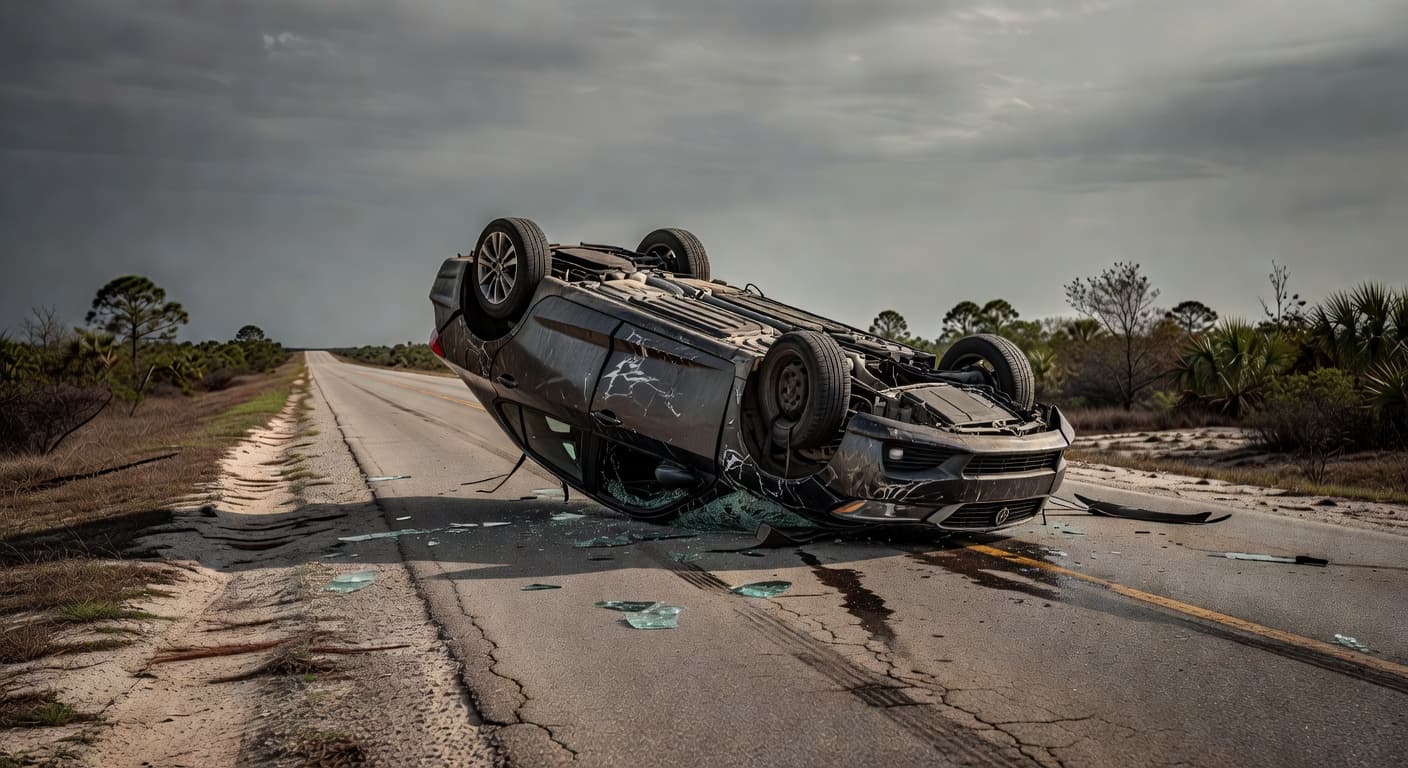
When documenting the scene, try to determine how the incident occurred. A tripped rollover often happens when a vehicle hits a curb or soft soil, while a non-tripped rollover is usually caused by high-speed maneuvers. Look for specific evidence such as tire blowouts or signs of steering overcorrection that might explain why the vehicle lost control.
Keep going after the obvious shots. Photograph the inside of the car, deployed airbags, broken glass, seat belts, child seats, and any loose parts on the ground. If a phone or dash camera captured the crash, save the file in more than one place.
Ask witnesses for names and numbers before they leave. Write down the responding officer’s name, the agency, and the crash report number. If the vehicle is towed, ask where it is going and who can authorize its release.
Do not rush repairs. The car itself serves as crucial evidence, especially if a vehicle defect or mechanical failure played a role. If the car is repaired or declared a total loss, ask for copies of the tow receipt, storage charges, and repair estimate. These documents are essential if there is a later dispute over the value of the car or the cost of the damage.
For a Florida-focused overview of early crash steps, see this rollover accident guide in Florida.
Report the crash to insurance carefully
Call your insurer soon after the accident, but keep the initial conversation short and strictly factual. Provide the date, time, location, vehicles involved, and the claim number if you have received one.
Florida no-fault rules play a significant role in how the initial claim is processed, particularly regarding personal injury protection, or PIP, coverage. Because prompt treatment is a requirement for these benefits, do not wait days to seek a professional evaluation if you were hurt.
A simple way to think about the first reports is this:
| Contact | Share this | Avoid this |
|---|---|---|
| Police | Exact location, injuries, trapped occupants | Guessing about fault |
| Insurance | Date, time, vehicles, claim number | Recorded statements before medical care |
| Doctor | Every symptom, even mild ones | Downplaying pain or numbness |
A short, factual report is safer than a long, speculative narrative. Avoid guessing about speed, traffic light colors, or specific lane positions if you are unsure. It is perfectly acceptable to state that you do not know. This keeps the record cleaner than providing a guess that may need to be corrected later. Be aware that police reports often list the status as investigation ongoing while authorities verify factors such as driver negligence or potential driving under the influence.
If an insurance adjuster requests a recorded statement, proceed with caution. You have the right to state that you need time to review your medical condition before providing further details. Finally, ensure you save every email, text message, and letter received from the insurer. Establishing a clear paper trail is vital for your case, especially when memories begin to blur over time.
Florida legal and insurance issues after a rollover
Rollover accidents often trigger complex disputes over liability. One insurer might point to speed, while another blames a sudden swerve, a lane change, or road conditions. If a vehicle safety system fails, you must also consider whether the vehicle manufacturer is responsible for the design or mechanical failure.
That is why evidence matters so much. Keep the vehicle, damaged parts, and repair estimates until a professional can inspect them. Do not throw away a car seat, helmet, or damaged personal item if it could be vital to your claim. If you suspect that a roof crush or a seatbelt failure contributed to your injuries, documenting these issues is critical. Under product liability law, if a mechanical failure or a manufacturing defect caused your vehicle to perform poorly during the crash, you may have legal grounds for a claim beyond a standard insurance policy.
Florida drivers often carry uninsured or underinsured motorist coverage, which becomes essential when the other party lacks sufficient insurance to cover your losses. If the crash involved a tire blowout or structural failure, save the damaged components and all photos of the scene.
When rollover accidents result in serious injuries, the financial burden grows quickly. Mounting medical bills and lost wages add immense pressure, especially if insurance adjusters begin disputing fault. In these situations, a Boca Raton auto accident lawyer can help organize your medical records, preserve critical evidence, and manage communications with insurance companies. Professional legal guidance is invaluable when the other side begins arguing over liability and the total value of your claim.
Common rollover injuries and why delayed symptoms matter
Rollover crashes exert violent forces on the head, neck, spine, and chest. The body can slam into a roof, window, steering wheel, or seat belt in mere seconds. Because of these dynamics, rollover accidents result in higher rates of occupant fatalities compared to most other types of vehicle collisions. While modern safety features like electronic stability control are specifically designed to prevent these events, they do not always succeed in keeping a vehicle upright.
The most common serious injuries include:
- Concussions and other traumatic brain injuries
- Neck and back strain
- Broken ribs, arms, or legs
- Spinal cord injuries
- Internal organ damage
- Cuts, bruises, and severe facial trauma
Delayed symptoms are common after a wreck because shock often masks pain. Swelling may build slowly, and internal bleeding can remain hidden for hours. A person might feel fine at the crash scene, only to notice worsening trouble later that day.
Pay close attention to symptoms such as headache, confusion, vomiting, numbness, weakness, chest pain, belly pain, blurred vision, or new back pain. If these signs appear or get worse, seek medical attention immediately. A significant injury does not wait for a convenient time to manifest.
Children, older adults, and anyone who lost consciousness during the crash need an immediate evaluation. A mild headache can quickly turn into a life-threatening problem when it is tied to an injury of the brain or spine. In cases where a loved one does not survive, families should know that they may be eligible to file a wrongful death claim to seek justice and hold negligent parties accountable.
A simple checklist for the next few hours
The hours after a rollover move quickly. This checklist helps you manage the immediate priorities and protect your interests.
- Call 911 and remain on the scene until responders arrive.
- Seek medical care the same day, even if you feel fine.
- Capture photos of the vehicle, road conditions, and any visible injuries.
- Collect witness contact information, the police report number, and towing details.
- Provide your insurance company with only the basic facts of the incident.
- Keep organized files of all receipts, medical discharge papers, prescription records, and documentation regarding funeral and burial costs if a fatality occurred.
- Avoid authorizing repairs, disposing of the vehicle, or posting details about the crash on social media.
- Consult with a rollover accident attorney if you sustained significant injuries or if fault remains in dispute.
- Take these steps to protect your legal rights and ensure you understand your potential for legal recourse.
Small steps add up. The more you preserve now, the easier it is to navigate the recovery process later.
Frequently Asked Questions
Why is it dangerous to move after a rollover crash?
Staying buckled and still is often the safest choice until rescuers arrive, as moving prematurely can lead to ejection from the vehicle or worsen potential spinal injuries. If the roof has caved in or doors are jammed, wait for professionals to safely extract you to avoid further trauma.
Should I see a doctor if I feel fine after the accident?
Yes, you should seek a medical evaluation immediately regardless of how you feel. Because shock and adrenaline often mask serious symptoms like internal bleeding or brain injuries, a prompt professional check-up ensures that hidden trauma is documented and treated before it worsens.
How should I communicate with insurance adjusters?
Keep your communication short and stick strictly to the facts, such as the date, time, and location of the incident. Avoid providing recorded statements or speculating on who was at fault until you have consulted with a professional and fully assessed your medical condition.
Why is it important to keep the damaged vehicle?
The vehicle is considered essential evidence, especially if a mechanical failure, defective seatbelt, or roof crush contributed to your injuries. Do not authorize repairs or dispose of the car until a professional has had the opportunity to inspect it for potential product liability claims.
Conclusion
A rollover crash can leave you stunned, sore, and unsure what to do first. The safest path is simple; get help, get checked, and keep the evidence in place.
Florida insurance claims can turn on details that fade fast. Taking photos, gathering medical records, collecting witness names, and filing prompt reports can make a real difference when the legal process begins.
In a crash that happens in seconds, the best response is calm, quick, and organized. While rollover accidents are often overwhelming, remember that the first careful hour after the event can shape everything that follows. By staying prepared and following these steps, you can better protect your rights and your recovery.