
Florida Airbag Injury Claims: Who May Be Liable
An airbag can prevent a fatal injury, but its deployment can also cause serious harm. A failure to deploy may leave you with brain trauma, while an inflator rupture can send metal fragments through the passenger compartment.
After a Florida crash, liability may involve more than the driver who caused the collision. The vehicle manufacturer, airbag supplier, dealership, or repair shop may share responsibility if a defective or improperly installed system caused additional injuries. Understanding which claim fits your facts is the first step toward protecting your rights.
Key Takeaways
- The at-fault driver may owe compensation for injuries caused by the crash.
- A vehicle or airbag manufacturer may face a product-liability claim when a defect caused or worsened the harm.
- Florida PIP insurance usually pays initial medical expenses and some lost income, regardless of fault.
- Crash photos, airbag components, electronic data, recall information, and medical records can help prove what happened.
- Florida deadlines can be short, and the deadline depends on the claim, accident date, and circumstances.
An Airbag Injury Can Create Two Legal Claims
Florida airbag injury claims often involve two separate questions:
- Who caused the collision?
- Did a defective airbag system cause additional harm?
The driver who ran a red light, changed lanes without looking, or drove while impaired may be responsible for the collision itself. That claim usually depends on negligence. You must show that the driver owed a duty of care, breached it, and caused your injuries and losses.
A product-liability claim is different. It focuses on whether the airbag or related safety system was defective. You may pursue that claim even when another driver caused the crash. For example, a negligent driver could cause the collision, while a defective inflator could cause a separate puncture injury. Both events may contribute to the final damages.
Florida product claims may involve strict liability. That generally means you don’t have to prove that the manufacturer acted carelessly. Instead, the evidence must show that the product had a design, manufacturing, or warning defect, and that the defect caused your injury. A product does not become legally defective merely because it caused pain during a crash. Airbags deploy with substantial force by design, and some abrasions or burns can occur during proper operation.
The key issue is whether the airbag performed as intended under the circumstances. Lawyers and experts may compare the injuries caused by the collision with the injuries caused or worsened by the airbag system. This is sometimes called an enhanced-injury claim.
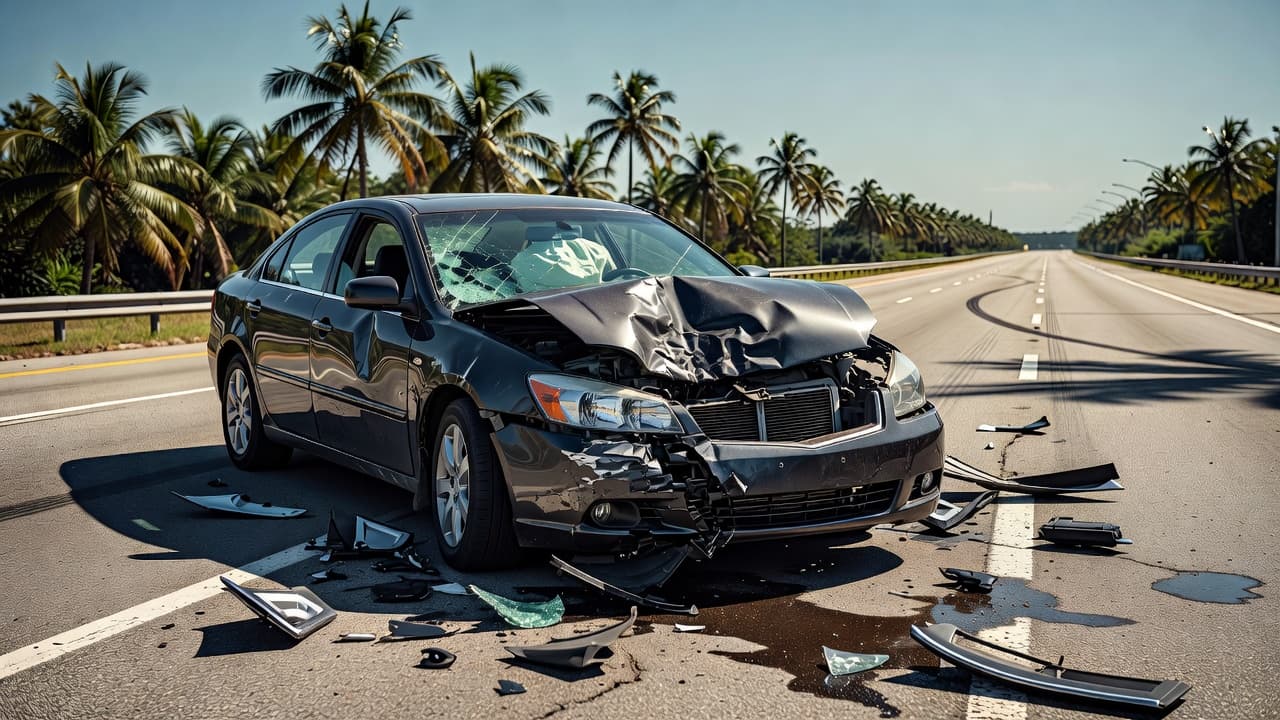
A claim involving an airbag may therefore proceed against one party or several parties. The facts, available evidence, and medical opinions determine who belongs in the case.
How Airbag Failures and Deployments Cause Injury
Airbags protect occupants by slowing the body’s movement during a collision. The system uses crash sensors, a control module, wiring, an inflator, and the airbag cushion. If one part fails, the entire system may work improperly.
Common airbag-related injury scenarios include:
- Failure to deploy: The vehicle suffers a crash that should have activated the system, but the bag stays inside the steering wheel or dashboard. The occupant may suffer a head, neck, chest, or facial injury that the airbag could have reduced.
- Premature deployment: The airbag opens during a minor impact or without a crash. A driver may lose control, suffer facial trauma, or collide with the deploying cushion.
- Unexpected deployment: A side, curtain, passenger, or knee airbag deploys at the wrong time or in the wrong sequence.
- Inflator rupture: A defective inflator can break apart and propel metal fragments into the cabin. The fragments may cause penetrating wounds, eye injuries, or fatal trauma.
- Improper replacement or repair: A shop may install the wrong component, fail to replace a crash sensor, or return a vehicle to service without restoring the supplemental restraint system.
The location and type of injury can provide important clues, but medical symptoms alone don’t prove a defect. A deployed airbag can cause skin abrasions, burns, bruising, fractures, hearing problems, and eye injuries. Chemical residue may also irritate the skin or lungs.
A non-deployment claim requires careful analysis of crash severity, impact direction, occupant position, seat-belt use, sensor readings, and system design. Airbags don’t deploy in every collision. Some crashes don’t meet the system’s activation conditions, even when the vehicle has visible damage.
You can review a broader discussion of common causes and effects in this Florida airbag injury accident guide. A recall can support an investigation, but recall status alone doesn’t prove that a particular defect caused your injury.
Who May Be Responsible for an Airbag Injury?
The responsible party depends on the failure and the evidence. Several defendants may have played different roles in the same event.
| Potentially responsible party | Possible legal theory | Example |
|---|---|---|
| At-fault driver | Negligence | The driver’s conduct caused the collision |
| Vehicle manufacturer | Product liability or negligence | The vehicle’s restraint system had a design or integration defect |
| Airbag or inflator manufacturer | Product liability | The inflator ruptured and released metal fragments |
| Repair shop or mechanic | Negligence or warranty claim | A technician installed an incorrect part or failed to restore the system |
| Dealership or seller | Product liability or negligent sale | A seller delivered a vehicle with a known safety defect |
| Prior owner | Fact-specific negligence claim | Someone knowingly disabled the airbag system |
A vehicle manufacturer may be responsible for how the supplemental restraint system works as a whole. The airbag maker may be responsible for a defective cushion or inflator. A repair facility may face liability if its work left the system unable to function.
Dealership liability depends on what the dealership knew, what services it performed, and how the vehicle entered the stream of commerce. A seller isn’t automatically liable for every injury involving a car it sold. Records, repair orders, recall notices, and communications can help establish the dealership’s role.
The driver who caused the crash remains a possible defendant even if an airbag defect worsened the injuries. Similarly, a defective-airbag claim may exist even if you made a driving mistake that contributed to the collision. Florida’s comparative-fault rules can affect the amount recovered and, in some cases, whether recovery is available.
Product-liability cases often require engineers, crash-reconstruction specialists, medical experts, and automotive technicians. Their opinions may address whether the airbag should have deployed, whether the system was defective, and how much harm the defect caused. Resources discussing airbag product-liability claims can help explain the separate issues involved.
Florida Insurance Coverage After an Airbag Crash
Florida follows a no-fault insurance system for many initial injury benefits. Your personal injury protection, or PIP, coverage generally pays medical expenses and a portion of lost income without requiring proof that another driver caused the crash.
Under Florida Statute 627.736, PIP commonly covers:
- Up to 80% of reasonable and necessary medical expenses
- Up to 60% of lost income and replacement services
- Certain death benefits, subject to the policy and statutory limits
The standard PIP limit is often $10,000, but the available amount can depend on whether a medical provider diagnosed an emergency medical condition. A policy may provide lower benefits when that requirement isn’t met. You should review your policy and seek medical care promptly after a crash.
PIP rarely covers the full financial effect of a serious airbag injury. Surgery, rehabilitation, future treatment, reduced earning capacity, permanent scarring, and pain may exceed those benefits. PIP also doesn’t compensate you for pain and suffering.
A claim against the at-fault driver may provide additional recovery when your injury meets Florida’s serious-injury threshold. The law generally requires proof of a permanent injury, permanent loss of an important bodily function, significant permanent scarring or disfigurement, or death. The medical evidence must support the claimed condition.
You may also have uninsured or underinsured motorist coverage. That coverage can matter when the negligent driver has no bodily-injury policy or carries limits that don’t cover your losses. A product-liability claim against a manufacturer or supplier follows a different path and doesn’t depend on the other driver’s insurance limits.
Possible damages may include:
- Medical bills and anticipated future care
- Lost wages and reduced earning capacity
- Permanent impairment or disfigurement
- Physical pain and emotional distress
- Loss of normal activities and enjoyment of life
- Wrongful-death damages for eligible surviving family members
Insurance companies may make early settlement offers before doctors understand the full prognosis. Accepting an offer usually ends the claim. Before signing a release, calculate future treatment costs and determine whether a separate product claim exists. This airbag injury compensation overview also discusses the difference between initial insurance benefits and broader compensation claims.
Evidence That Can Prove an Airbag Defect
Airbag cases can become difficult when the vehicle is repaired, sold, dismantled, or destroyed. The vehicle is often the most important piece of evidence, so preservation should begin quickly.
Ask the insurer, tow yard, repair facility, or salvage company in writing to preserve the vehicle. Don’t authorize disposal or allow the airbag module, inflator, sensors, or other parts to be discarded. A lawyer may send a preservation letter to the companies and people who control the evidence.
Useful evidence may include:
- Photographs of the steering wheel, dashboard, deployed airbags, seat belts, cabin debris, burns, and wounds
- The vehicle identification number, title, ownership history, and repair records
- The police report, witness statements, traffic-camera footage, and nearby business video
- Medical records that describe the timing and pattern of the injuries
- The airbag control module and event data recorder information
- Diagnostic trouble codes and supplemental restraint system fault codes
- Recall notices, service bulletins, dealership records, and prior repair invoices
The event data recorder may contain information about speed, braking, seat-belt use, and crash forces. The restraint-control module may show whether the vehicle detected a crash and whether it sent a deployment command. Investigators must collect and interpret that data correctly. A damaged module isn’t proof of a defect, and a stored code doesn’t explain the entire crash by itself.
Keep damaged clothing, broken glasses, medical devices, and any fragments found after the collision. Photograph them before cleaning or repairing anything. Don’t handle suspected metal fragments more than necessary. An expert can document and examine them safely.
Your medical records should describe when symptoms began and whether doctors believe the crash or airbag caused them. Tell each provider about the collision and the airbag event. Consistent records help prevent an insurer from arguing that the injury came from an unrelated condition.
A recall search through the National Highway Traffic Safety Administration’s VIN database may identify an unresolved safety campaign. Still, the investigation must connect that recall or defect to your particular vehicle and injury.
Florida Deadlines and Comparative Fault
The filing deadline can determine whether a valid claim survives. Florida Statute 95.11 generally provides a two-year period for negligence actions and product-liability actions arising after the 2023 tort-law changes. Wrongful-death claims also generally have a two-year deadline under Florida law.
The exact rule may depend on the collision date, the legal theory, the identity of the defendant, and exceptions involving minors, government entities, or delayed discovery. A claim against a public agency may require notice before filing suit. Older accidents may fall under different deadlines than newer accidents.
Don’t assume that an insurance claim extends the lawsuit deadline. Calls with an adjuster, medical treatment, or settlement negotiations usually don’t replace filing a lawsuit before the statutory period expires.
Florida’s modified comparative-fault law can reduce recovery when more than one person contributed to the harm. For claims subject to the current rule, a plaintiff who is more than 50% responsible may be barred from recovering damages. At 50% or less, the award may be reduced by the assigned percentage of fault.
Airbag cases can involve several layers of fault. A jury may consider the driver’s conduct in causing the crash, the occupant’s conduct, the vehicle’s design, and the repair work. That doesn’t mean the driver automatically loses a product claim. It means the evidence must separate the injuries caused by the collision from the injuries caused or worsened by the defective system.
When to Contact a Florida Personal Injury Lawyer
An attorney can investigate the crash before important evidence disappears. That work may include securing the vehicle, obtaining electronic data, reviewing recall history, identifying insurers, and consulting qualified experts.
Legal counsel can also handle communications with adjusters. Insurers may ask for a recorded statement, broad medical authorization, or access to social-media accounts. Those requests can affect a claim’s value. You have the right to understand what you’re signing and why the insurer wants it.
A lawyer may evaluate separate claims against the driver, manufacturer, component supplier, dealership, or repair shop. The case may require a crash reconstruction, mechanical inspection, medical review, or analysis of the vehicle’s design. Those investigations take time, especially when a manufacturer disputes the defect.
Before choosing representation, ask:
- Who will investigate the vehicle and preserve the airbag evidence?
- Does the firm handle product-liability claims as well as auto collisions?
- How are attorney fees and case expenses calculated?
- Will the lawyer explain settlement offers and litigation risks?
- Can the firm communicate in your preferred language?
Lyons & Snyder offers free consultations and handles South Florida injury cases on a no-recovery, no-fee basis. Ask the firm to explain the fee agreement, litigation expenses, insurance coverage, and possible defendants before you hire anyone.
A deployed airbag doesn’t automatically prove negligence, and a failed airbag doesn’t automatically prove a defect. The claim depends on technical evidence that connects the system’s performance to the injury.
This article provides general information, not legal advice. A Florida attorney can evaluate how the law applies to your accident, injuries, and filing deadlines.
Conclusion
Florida airbag injury claims can involve the driver who caused the crash and a separate claim against a manufacturer, supplier, dealership, or repair shop. The strongest cases connect the airbag’s performance to a specific injury with physical evidence, electronic data, medical records, and expert analysis.
Report the crash, obtain medical care, photograph the vehicle, protect the damaged parts, and avoid signing a final release before you understand the full value of the claim. When an airbag changes the outcome of a collision, the right legal question is often not only who caused the crash, but also whether a defective safety system made the injuries worse.