
How Black Box Data Helps Florida Car Accident Claims
A crash can turn into a finger-pointing contest fast. One driver says they braked. The other says they were speeding. Meanwhile, the insurance company wants proof, not guesses.
That is where Florida black box data can matter. In most vehicles, the “black box” is an event data recorder, or EDR, and it may hold a short snapshot of what the car was doing before impact.
Key Takeaways
- A car’s “black box” usually means an event data recorder (EDR), not a movie-style recorder.
- EDR data can help show speed, braking, throttle use, seatbelt status, airbag timing, and impact timing.
- The data can support or challenge a driver story, but it does not record video, audio, or GPS location.
- Timing matters because the vehicle may be repaired, sold, or overwritten before anyone preserves the module.
- In Florida claims, this data can matter a lot when fault is disputed and every second before the crash counts.
What “Black Box” Means in a Car Crash
Most people hear “black box” and think of airplanes. In a car, the term usually points to the EDR inside the airbag or restraint system. It stores a brief crash record, often about five seconds before impact, and sometimes a little more depending on the vehicle.
The exact details depend on the make, model, and year. Some cars record speed and brake use. Others also capture throttle position, steering input, airbag deployment timing, seatbelt status, and the change in speed at impact. A Florida-focused overview of that kind of evidence appears in this discussion of EDR data in Florida car accident cases.
The key point is simple. The EDR does not tell a full story by itself, but it can preserve a short and objective snapshot when memories are fuzzy and stories change.
How EDR Data Strengthens a Florida Injury Claim
The best car accident cases usually rest on more than one piece of evidence. Still, EDR data can fill in gaps that photos and witness statements cannot always cover.
The most useful fields often answer basic questions about the seconds before impact. Did the driver brake? Were they accelerating? How fast was the car moving? Was the seatbelt buckled? Did the airbags deploy right away, and how hard was the crash?
Here is a quick look at what that data can do in real claims:
| EDR data point | What it may help show in a claim |
|---|---|
| Vehicle speed | Whether the driver was slowing down or still moving fast before impact |
| Brake status | Whether the driver tried to stop |
| Throttle position | Whether the driver was accelerating |
| Seatbelt status | Whether the occupant was restrained |
| Airbag timing | How severe the impact may have been |
| Change in speed | The force of the crash |
That kind of record can matter in rear-end collisions, left-turn crashes, lane-change disputes, and intersection impacts. If one driver says they were stopped, the EDR may show movement. If another claims they had time to react, the brake and throttle data may tell a different story.
In many cases, the data helps an attorney or crash reconstruction expert test the other side’s version of events. A practical explanation of how that can support or challenge a witness account appears in this article on black box data in Florida claims.
What the Data Can and Cannot Prove
EDR evidence is useful because it is objective. It is also limited. That limitation matters.
It can help show vehicle movement, restraint use, and crash timing. It usually cannot show why the driver acted a certain way, whether a phone was in use, or who had the green light. It does not record audio or video. It also does not give GPS coordinates.
That means black box data works best when it is paired with other proof, such as photos, scene measurements, repair records, witness statements, police reports, and medical records. On its own, it rarely answers every question.
EDR data can support a strong claim, but it works best as part of a larger evidence file.
Florida claims often involve competing versions of the same few seconds. One driver says they never saw the car ahead stop. Another says the impact came out of nowhere. The EDR can narrow that argument, but it does not replace the rest of the evidence.
Why Fast Preservation Matters After a Florida Crash
The module that stores the data may survive serious damage. In many vehicles, the information sits in crash-resistant memory, so it can survive fire or water exposure. The bigger risk is not always destruction. It is delay.
A car may get towed. It may go to a repair shop. It may be declared totaled. In some cases, the vehicle may be sold before anyone images the data. Once that happens, recovery gets harder.
That is why preservation should happen early. If the vehicle is still available, a lawyer can ask that it not be repaired, altered, or disposed of until the data is secured. A plain-English guide to that process, including chain of custody concerns, is available in this article on preserving vehicle event data after a Florida crash.
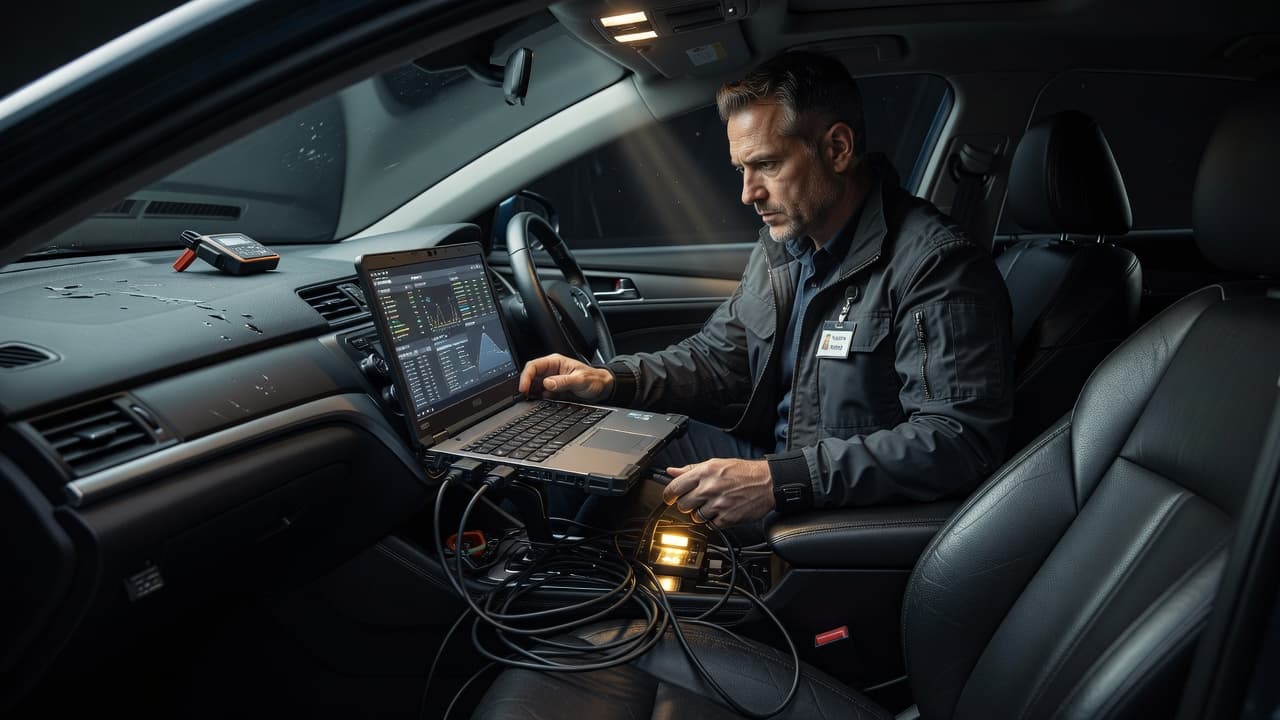
The download itself should be done carefully. The person pulling the data needs the right tools and the right process. If the retrieval is sloppy, the other side may question whether the record is complete or reliable. That is why screenshots and memory are not enough when the module is available.
Florida Claims, Insurance Disputes, and Why the Timing Matters
Florida insurance claims move quickly, and adjusters often start looking for weaknesses right away. Fault, speed, braking, and seatbelt use can all become part of the debate. Because Florida uses comparative fault, those details can affect how blame gets divided and how much money is at stake.
That is one reason EDR data can be so useful in a Florida car accident claim. It may support a settlement demand when the insurance company disputes speed or tries to shift blame. It may also help a case that needs to be filed in court if the insurer refuses to deal fairly.
The timing matters even more when the crash happened in busy traffic, at an intersection, or during a left turn. Those cases often turn into a battle over who had room to react and who failed to slow down. EDR data can help answer that, especially when the driver’s story changes after the accident.
A few practical examples make the point clear:
- A driver says they braked hard, but the module shows no brake input before impact.
- A passenger says everyone was restrained, but the data shows the driver’s seatbelt was unbuckled.
- A driver says the crash was minor, but the EDR shows a sharp change in speed and airbag deployment.
- A motorist says they never accelerated into the intersection, but throttle data suggests otherwise.
Those records do not decide every case. They do, however, give the claim a firmer footing than memory alone.
Getting the Right Evidence After a Crash
If you want black box data to help your claim, the car has to be preserved early. That means acting before repairs start and before the vehicle gets moved out of reach.
It also means collecting the rest of the file at the same time. Photos of the vehicles, contact information for witnesses, the police report, medical records, and repair estimates all help put the EDR data in context. When those pieces line up, the claim becomes much harder to dismiss.
For injured drivers, that early evidence work can make a real difference. The EDR may only capture a few seconds, but those seconds can shape the rest of the case.
Conclusion
A crash can feel like a blur, but the car may still hold a short record of what happened. That is why black box data matters in Florida car accident claims. It can show speed, braking, seatbelt use, impact timing, and other details that help separate facts from guesswork.
The strongest claims usually preserve the vehicle early and pair the EDR with the rest of the evidence. When that happens, the few seconds before impact can carry real weight.