
How to Correct Florida Crash Report Errors
A crash report can affect your insurance claim, injury case, and how investigators understand what happened. If you find Florida crash report errors, act quickly, gather proof, and ask the agency that prepared the report to make an official update.
You usually cannot edit a law-enforcement report yourself. The agency must review your request, verify the facts, and decide whether to amend the report or add supplemental information. The process differs if you filed a self-report instead.
Disclaimer: This article provides general information, not legal advice. A lawyer can evaluate your specific facts, deadlines, insurance issues, and legal options.
Key Takeaways
- Check names, dates, vehicle details, injuries, insurance information, diagrams, and the narrative.
- Support every requested correction with records, photographs, video, witness information, or other evidence.
- Contact the investigating law-enforcement agency for an officer-prepared report.
- Self-reported crashes follow a separate FLHSMV submission process.
- Tell your insurer about factual errors, but communicate carefully and avoid guessing or admitting fault.
What a Florida Crash Report Can and Cannot Do
A Florida crash report records information collected after a collision. Depending on the report type, it may include the crash location, date and time, involved people, vehicles, injuries, roadway conditions, insurance details, diagram, and the officer’s narrative.
The report matters, but it isn’t the final word on liability. Insurance adjusters, attorneys, and courts may review it alongside photographs, medical records, witness testimony, traffic-camera footage, vehicle damage, and other evidence.
A factual mistake is different from a disagreement with the officer’s conclusion. Examples of factual errors include:
- A misspelled name or incorrect date of birth
- The wrong vehicle year, make, model, or license plate
- Incorrect insurance information
- A wrong crash location or direction of travel
- An omitted passenger, witness, or injury
- A diagram that doesn’t match the physical evidence
A request becomes more difficult when it challenges an officer’s interpretation, such as the listed contributing action or an opinion about fault. You can still provide evidence, but the agency may not change a professional judgment simply because you disagree with it.
Florida crash reports are generally restricted from public access for the first 60 days after a collision, subject to legal exceptions. The Florida crash report access information explains how reports are obtained and purchased through the state system.
The report may also have different versions. An agency can create an update in its crash-reporting system, and that updated information can replace the prior version in the state database. Keep the original copy, however, because insurers, attorneys, and agencies may have saved earlier versions.
How to Review Florida Crash Report Errors
Read the entire report, not only the paragraph that appears to blame you. A small mistake in one section can affect how another section is understood.
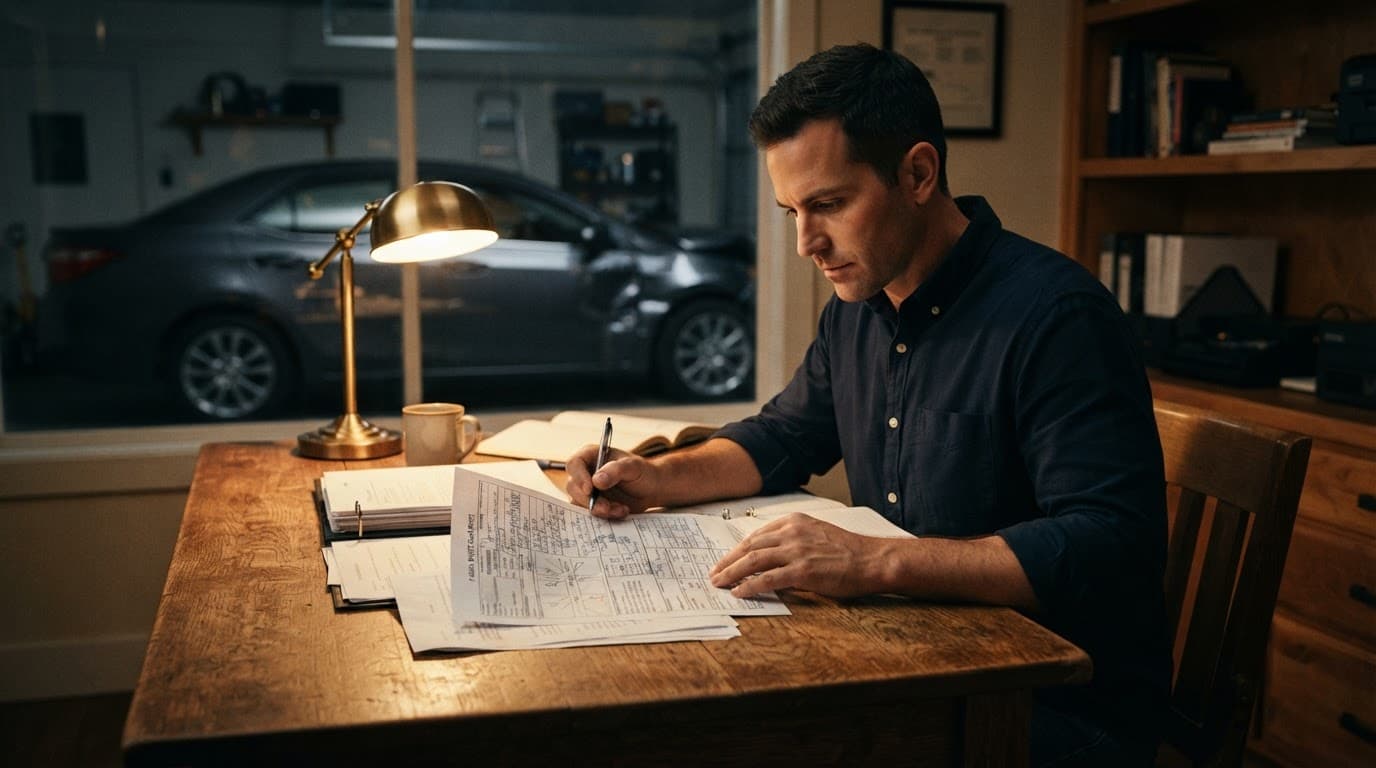
Start by comparing the report with documents created close to the crash. Use your driver’s license, registration, insurance card, hospital paperwork, photographs, and text messages with witnesses. Check the date and time against phone records or business surveillance when available.
Pay close attention to these areas:
- Personal information: Confirm every driver’s name, address, date of birth, driver’s license number, and injury status.
- Vehicle information: Check the vehicle number, ownership, license plate, registration state, damage description, and insurance carrier.
- Scene details: Review the street, intersection, lane, traffic controls, weather, lighting, road surface, and direction of travel.
- Narrative and diagram: Compare the officer’s description with photographs, vehicle damage, skid marks, dashcam video, and witness accounts.
Write down the exact page, section, or field where the error appears. Then describe the correction in neutral language. For example, say, “The report lists the vehicle as a 2020 Honda Civic. The registration and photographs show a 2021 Honda Accord.” Avoid writing, “The officer completely got everything wrong.”
The Florida crash report manual provides background on the information collected in Florida’s uniform crash reports. It can help you understand why a field appears and what type of information belongs there.
Preserve the evidence in its original form. Save the original video file, keep unedited photographs, and avoid changing file names or metadata. If someone sends you a video, ask them to preserve the original and record when and how they obtained it.
How to Request a Correction from the Agency
First, identify who prepared the report. Look for the agency name, report number, officer’s name, and HSMV crash report number. The correct contact is usually the agency’s traffic unit, crash investigations unit, records division, or supervisor.
Call the agency and ask for its current process for requesting a factual correction or supplemental report. Procedures vary among the Florida Highway Patrol, sheriff’s offices, municipal police departments, and other investigating agencies.
For an officer-prepared report, the agency typically handles the correction through its internal crash-reporting system. Florida agencies use TraCS in the update and validation process. An officer or authorized records employee may create an “Update Crash Form,” revise the verified information, validate it, and return it for supervisory review.
You should not attempt to alter the report yourself. Instead, prepare a concise written request that includes:
- Your full name and contact information
- The crash date, location, and report number
- The exact information you believe is wrong
- The corrected information
- A short explanation of the supporting evidence
- Copies of relevant records, photographs, or statements
- A request for written confirmation of the agency’s decision
Keep the original documents and send copies. If you submit the request by email, save the sent message and attachments. If you mail it, use a delivery method that gives you proof of delivery.
If you filed the crash yourself, follow the FLHSMV instructions for the self-report rather than contacting an officer who never investigated the scene. The official Driver Report of Traffic Crash form provides submission instructions, including the self-report email address, SelfReportCrashes@flhsmv.gov, and the Tallahassee mailing address listed on the form.
A self-report correction should identify the original submission and explain what needs to be changed. Sign the revised paperwork as required. Because agency instructions can change, check the current FLHSMV form before sending anything.

What to Do If the Agency Will Not Change the Report
An agency may reject a request when the proposed change concerns an officer’s interpretation rather than a verifiable fact. It may also decide that the available evidence doesn’t support the requested correction.
Ask whether the agency will accept a supplemental statement or supplemental report. A supplement can place additional facts and evidence in the file even when the original narrative remains unchanged. Request the agency’s answer in writing and keep the response with your crash records.
You can also provide the correction request and supporting documents to every insurer handling the claim. Ask the adjuster to attach them to the claim file and consider them when evaluating liability. If the insurer continues relying on incorrect information, ask what evidence it needs to reassess the claim.
A crash report that says you caused the collision doesn’t automatically prevent you from pursuing compensation. The report is one piece of evidence. Other proof may show that another driver, a vehicle owner, a business, or a roadway condition contributed to the crash.
When the report involves serious injury, death, disputed fault, or missing evidence, speak with a Florida personal injury attorney promptly. A lawyer can request records, identify additional witnesses, communicate with insurers, and determine whether a correction request or litigation strategy makes sense.
Protect Your Claim While the Correction Is Pending
Correcting the report should happen alongside, not instead of, protecting your health and insurance claim. Seek medical care for crash-related symptoms and follow the provider’s instructions. Delayed symptoms are common, and a medical record can document when pain, limited movement, or other problems began.
Notify your insurer within the time required by your policy. When an adjuster calls, give accurate facts you know firsthand. Don’t guess about speed, distance, timing, or another driver’s intentions. You can say that you are still gathering information when you don’t know an answer.
Avoid posting crash theories or accusations on social media. Don’t delete photographs, messages, videos, or location records. Also, don’t sign a settlement agreement before you understand the full effect of your injuries and damages.
Create one case file that includes:
- The original crash report and every later version
- Your correction request and proof of delivery
- Agency responses and supplemental materials
- Photographs, videos, witness details, and vehicle records
- Medical bills, treatment notes, lost-wage documents, and insurer correspondence
Most importantly, use consistent facts in conversations with medical providers, insurers, and agencies. A correction should clarify the record, not create new contradictions. If you later remember something, explain that it is a recollection and identify what supports it.
Conclusion
A Florida crash report error deserves prompt attention, especially when it affects your identity, injuries, vehicle information, or account of the collision. Review the report line by line, preserve original evidence, and send a documented request to the agency that prepared it.
If the agency won’t revise an opinion or the insurer continues relying on an inaccurate report, the rest of the evidence still matters. Protecting your rights starts with accurate information, timely action, and careful communication.