
Florida Dash Cam Footage and Injury Claims
A dash cam can turn a heated blame game into a clear timeline. It can also expose gaps, bad angles, or missing moments that matter just as much as the clip itself.
In a personal injury insurance claim, Florida dash cam footage is often powerful because it shows movement, timing, and driver behavior in real time. Under Florida law, the outcome of an insurance claim is significantly impacted by the availability of objective video evidence. This footage can effectively back up your story or challenge the other driver’s version of events, though it may also complicate a case if the camera captures something you did not expect.
Key Takeaways
- Dash cam video evidence can be a powerful tool for proving fault, but it rarely tells the whole story by itself.
- Original files, timestamps, and metadata matter because edited clips invite disputes.
- Florida dash cam footage can help or hurt your claim depending on what the video actually shows.
- Police, insurers, and opposing parties may ask for the footage, especially if a claim becomes formal.
- Florida laws and claim procedures can change, so a local personal injury lawyer should review the facts of your case.
How Florida Courts and Insurers Read Dash Cam Video
Courts and insurance adjusters usually ask the same basic question first: what does the video prove? When reviewing video evidence after a car accident, they are primarily focused on proving fault. If a dash cam shows a driver running a red light, crossing a lane, or backing into another vehicle, it can establish liability quickly. However, the footage must be considered admissible in court to hold real weight. If the recording shows the opposite, it can narrow your legal options just as quickly.
Video also helps when memories clash. After a crash, people often forget details, confuse directions, or fill in gaps without meaning to. A recording cuts through that uncertainty. For that reason, lawyers often treat dash cam video as one piece of a larger proof package rather than the entire case.
That distinction matters. Florida cases still turn on negligence, injury evidence, medical care, witness statements, vehicle damage, and insurance coverage. A video can strengthen those facts, but it does not replace them.
For a broader look at how video evidence affects claims, see how dash cams affect Florida car accident claims.
When Dash Cam Footage Strengthens a Claim
Dash cam footage helps most when it answers a disputed question quickly. Was the other driver speeding? Did they fail to yield? Did they make an unsafe lane change? Did a driver back out of a parking space without checking behind them? Video can capture those details better than a written statement.
That matters in all kinds of car accident cases, including rear-end collisions, intersection wrecks, parking lot incidents, and bicycle cases. In bike and pedestrian crashes, the stakes are often high even at low speeds. The Insurance Institute for Highway Safety reported 843 bicycle fatalities in crashes involving motor vehicles in 2019, which shows how serious these cases can become.
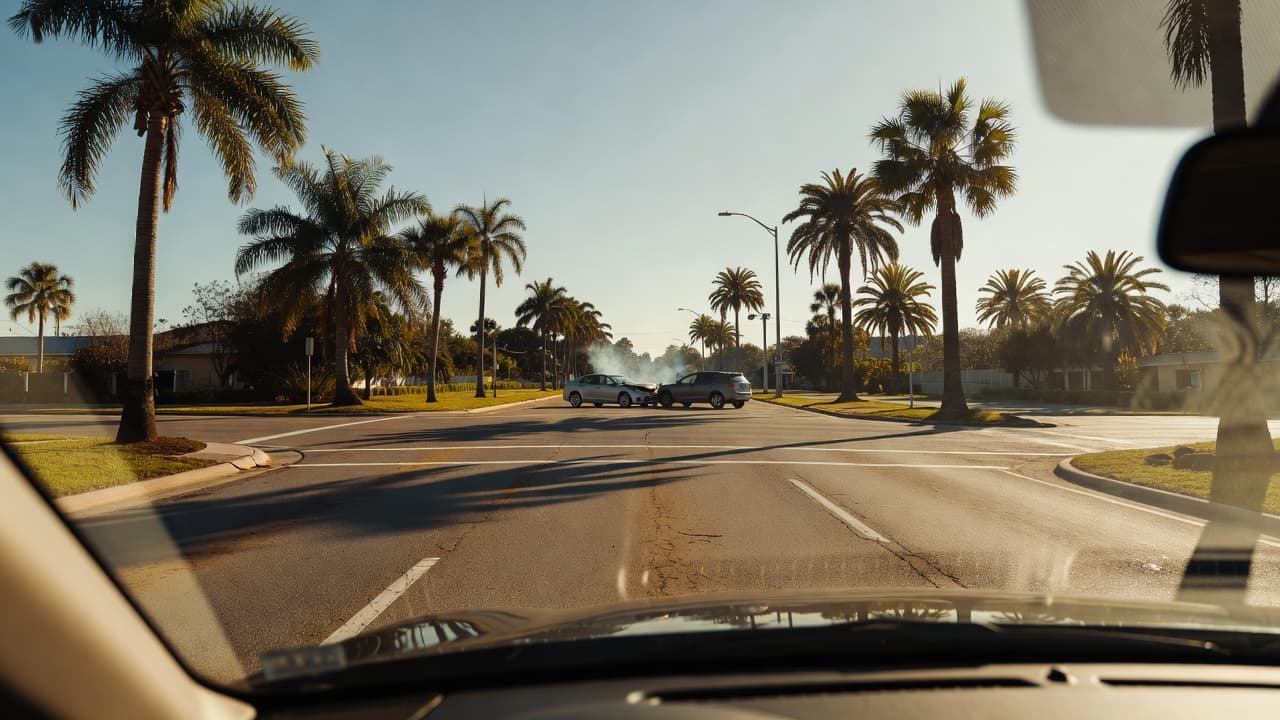
In a bicycle crash, the video may show a car drifting into a bike lane, turning across a cyclist’s path, or stopping in a way that blocks traffic. In a pedestrian case, it may show whether the driver had enough room to see someone in a crosswalk or parking lot. Furthermore, Florida dash cam footage is vital for accident reconstruction experts who need to analyze the precise physics of a crash. These recordings also serve as a powerful tool for proving fault in complex intersection collisions, helping to prevent insurance fraud or the negative impact of staged accidents.
Those details can matter because Florida courts and insurers look closely at lane position, right of way, visibility, and attention. That same footage can also help with injury proof following a car accident. A sudden impact may support the seriousness of the collision, even if the vehicle damage looks minor. That is especially important when an insurer tries to argue that a small dent means a small injury.
For another perspective on this issue, dash cams can impact a personal injury case.
When the Same Video Can Hurt Your Case
A dash cam is not a loyal witness. It records exactly what happened, rather than focusing on what helps your personal injury claim.
If the camera shows you violating traffic laws, such as rolling through a stop sign, changing lanes without signaling, or following other vehicles too closely, the defense will certainly use that footage. Even if the other driver was also negligent, the recording can be used to establish modified comparative fault, which may significantly reduce the total value of your case under current Florida law.
Sometimes the damage is more subtle. A clip may leave out the first few seconds before impact, which is often where the real story begins. A narrow camera angle may miss a second vehicle, a pedestrian, or a traffic signal. Furthermore, an audio recording can capture statements made in the heat of the moment, which might be repeated later to undermine your credibility. It is also important to remember that Florida is a two-party consent state, meaning an audio recording that captures private conversations between passengers without their permission could potentially implicate state wiretapping laws.
The best dash cam footage is honest, complete, and provided in the proper context. A short clip taken out of a longer sequence can make a routine stop look suspicious or make a dangerous maneuver seem less serious than it truly was. That is why a lawyer should review the full file before anyone shares it with insurance adjusters.
In some claims, a video may reveal that the crash happened differently than you remember. That does not necessarily mean you have a bad case, but it does mean the evidence must be handled with care and professional guidance.
Preserving the Original File Matters
Once a recording is overwritten, it may be gone for good. That is why preserving your Florida dash cam footage is one of the first steps to consider when preparing an insurance claim after a crash.
Save the original file immediately. Keep the raw version, the timestamp, and any file data the camera created. Do not trim the clip unless you are working from a separate copy. Furthermore, try to avoid re-saving the file through a phone app, as uploading and downloading files can strip away important metadata.
The original video is often more valuable than the edited clip you send around later.
It helps to make at least two copies, with one stored locally and one backed up in a secure location. If your camera uses a memory card, stop using it until the file is safely copied. If the card continues to record in a loop, the most useful video evidence can disappear without warning.
Metadata is essential for authentication. Time, date, file type, and device information help verify that the recording is genuine. Because original files are far more likely to be admissible in court than altered versions, these details are critical. If the other side questions whether the video was tampered with, these technical details become vital. A Florida personal injury lawyer can often help you preserve the file in a way that best protects your claim.
Who May Ask for the Footage
People often ask whether they are required to share dash cam video with police, insurers, or the other driver.
Police may request the recording at the scene or during a follow-up investigation. If they do, ensure the official police report accurately reflects the existence of this video evidence. Insurance companies often demand recordings during the claim process, particularly if fault is disputed. If a lawsuit is filed, relevant video becomes a standard part of discovery. Under these legal requirements, you may be obligated to produce the footage if it is tied to the crash and the specific issues in dispute.
However, that does not mean you should send away your only copy without a plan. Keep your original file, note when you saved it, and document every version you share. If you provide a copy to an adjuster for your insurance claim, always keep the exact same version for your own records.
A lawyer can also evaluate the request itself. Sometimes an insurer asks for more information than they are actually entitled to receive. In other cases, a request might come too early, before the claim has been fully evaluated. The right response depends on the facts, the terms of your policy, and the current stage of your case.
For a related consumer guide, see how dash cams can affect Florida injury claims.
What to Do After a Florida Crash
After a car accident, you should treat your dash cam like any other vital piece of evidence. Save the digital file, photograph the scene, and seek medical attention immediately if you were injured. When recording road events, be mindful of Florida law regarding windshield obstruction guidelines to ensure your device is mounted legally. While Florida no-fault benefits often begin with PIP coverage, those benefits have strict limits and may not cover the full scope of your medical costs or lost income.
Prompt treatment is essential. In many Florida claims, you must seek medical care within a specific window for PIP to apply, and delays can lead to avoidable insurance disputes. The same principle applies to your evidence. The sooner the video is preserved, the lower the risk of data loss or confusion.
If you were hurt, explain the incident clearly to your doctor. It is also wise to have a Florida personal injury attorney review the footage before you share it with anyone else. An experienced lawyer can help you determine how the video impacts your pursuit of compensation, ensuring the footage is used effectively to support your case.
Frequently Asked Questions
Is it mandatory to share my dash cam footage with the other driver?
No, you are generally not required to share your dash cam footage directly with the other driver at the scene or during a dispute. While insurance companies and the legal discovery process may eventually require the disclosure of evidence, you should consult with an attorney before providing the video to any outside party to ensure your rights are protected.
Can my dash cam video be used against me in a Florida accident claim?
Yes, dash cam footage is objective and can potentially reveal your own errors, such as failing to yield or speeding. Because Florida follows comparative fault rules, any evidence showing your partial negligence can be used to reduce the potential settlement value of your injury claim.
Should I edit or trim my dash cam video before sending it to an insurance company?
You should never edit or trim your original video file before submitting it to an insurance adjuster. Altered clips can be perceived as evidence tampering or lack credibility, so you should always preserve the raw, original file with its full metadata intact for legal authentication.
Do I need to inform passengers that my dash cam is recording audio?
Florida is a two-party consent state, which means recording private conversations without the permission of everyone involved can potentially implicate state wiretapping laws. To avoid legal complications, it is best to disable audio recording or ensure passengers are aware that audio is being captured in the vehicle.
Conclusion
Florida dash cam footage has become a cornerstone for securing fair compensation after an accident, yet its effectiveness depends entirely on how it is preserved and interpreted. This evidence can clearly demonstrate fault, substantiate your injuries, or highlight critical details that require immediate legal attention.
The footage is vital because it often provides a more objective account than human memory following a traumatic collision. However, the integrity of your case can hinge on the details, as a short clip, an edited file, or a missing timestamp can inadvertently alter the narrative. Under Florida law and the guidelines established by Florida Statute, your documentation must be handled with care to remain admissible and persuasive.
If you have dash cam footage after a crash, keep the original file secure, create backups, and seek professional guidance before sharing it with any party. Because liability is often determined by what the video evidence reveals, it is essential that a qualified Florida personal injury lawyer reviews the specific details of your situation to ensure your claim is protected.