
Florida Jackknife Truck Accidents and Who May Be Liable
A jackknife crash can block a highway in seconds and leave you dealing with injuries, vehicle damage, and a complex web of insurance questions. Because a fully loaded tractor-trailer can weigh up to 80,000 pounds, these incidents often result in massive, multi-car pileups on busy Florida interstates. When navigating the aftermath of these events, the biggest issue is often not just what happened, but who helped cause it.
That answer is rarely simple. Florida jackknife truck accidents often involve more than one careless decision, ranging from a driver’s braking mistake to a company’s poor maintenance or a loader’s negligent cargo work. Understanding the sequence of events is essential when you are determining who is responsible for the resulting damages.
Key Takeaways
- Jackknife crashes happen when a truck and trailer fold into a sharp angle, usually after the tractor-trailer loses traction or the driver loses control.
- More than one party may share fault, including the driver, trucking company, cargo loader, maintenance shop, or parts maker.
- Common causes include speeding, sudden braking, poor maintenance records, shifting cargo, bad weather, and defective parts.
- Victims may seek payment for medical treatment, lost income, pain and suffering, future treatment, and property damage.
- Early investigation matters because truck data, cargo records, and repair evidence can disappear fast, and Florida deadlines apply.
How a Jackknife Crash Happens on Florida Roads
A jackknife crash starts when the tractor-trailer cab and its attached trailer stop moving in the same direction. The cab may slow or skid first, which causes the trailer to swing outward like a folding knife. Once that happens, the driver typically loses the ability to steer the rig back into its proper lane.
Florida roads create plenty of chances for these incidents to occur. Wet road conditions, heavy rain, and sudden traffic congestion on fast-moving interstates often lead to hazardous situations. When a driver performs sudden braking to avoid a collision, the vehicle may lose traction, causing the trailer to swing out before the operator can recover control. These events frequently result in dangerous chain-reaction crashes that involve multiple vehicles on busy Florida highways.
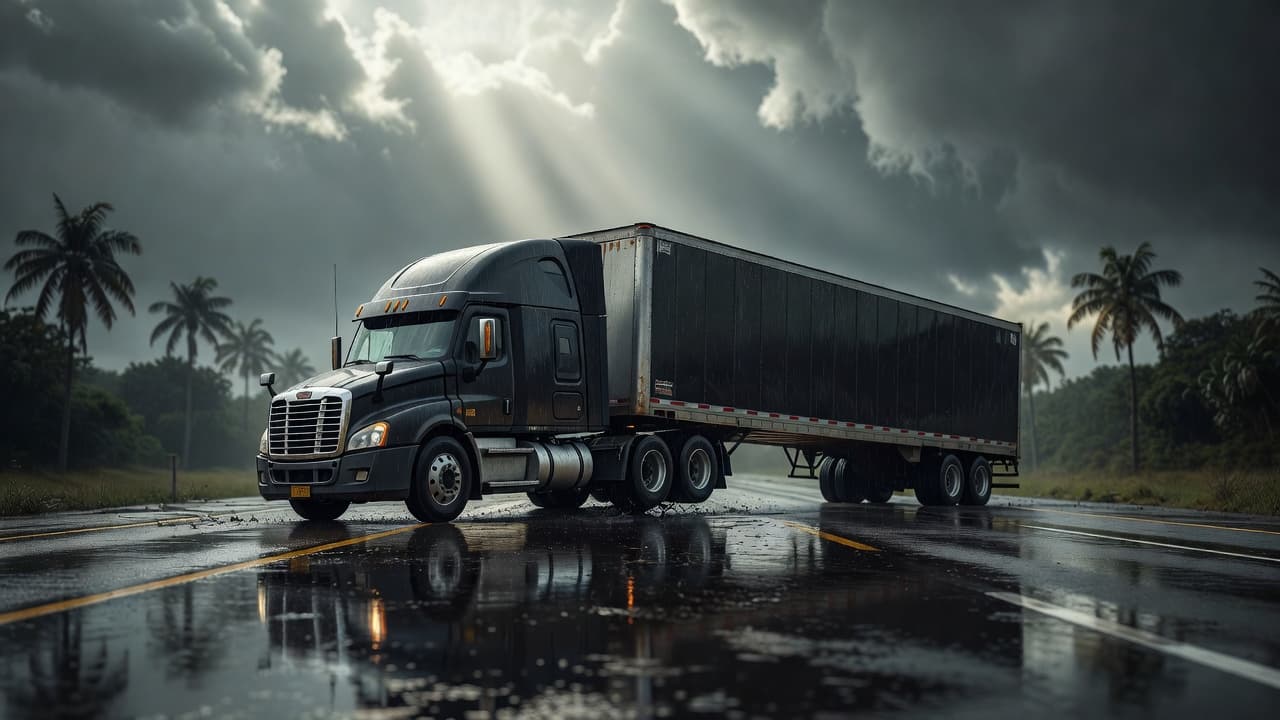
The same kinds of problems that cause many Florida truck crashes can also trigger a jackknife. Speed, worn tires, and driver distraction are common ingredients in these accidents.
A closer look at jackknife truck accident causes in Florida shows how often one bad choice can turn into a devastating multi-vehicle wreck.
Who May Be Liable After a Jackknife Truck Accident
Florida liability often reaches beyond the person behind the wheel. While the driver is frequently a primary responsible party, a thorough legal investigation can point to the trucking company, cargo crew, mechanic, or manufacturer.
| Potentially responsible party | Why they may share fault | What evidence may matter |
|---|---|---|
| Truck driver | Speeding, sudden braking, fatigue, distraction, or unsafe lane changes | Logbooks, dashcam footage, phone records, witness statements |
| Trucking company | Bad hiring, weak training, unsafe schedules, poor supervision, or maintenance failures | Employment files, safety policies, dispatch records, maintenance records |
| Cargo loader or shipper | Overloaded or shifted cargo that throws the trailer off balance | Load manifests, weight records, tie-down reports |
| Maintenance shop or truck owner | Missed brake, tire, or steering problems, or sloppy repairs | Repair orders, inspection reports, maintenance records |
| Parts manufacturer | Defective brakes, tires, or stability systems | Product testing, recall records, expert analysis |
Florida law utilizes a comparative negligence standard, which allows fault to be divided among multiple defendants. This is critical because a jackknife truck accident often stems from a sequence of failures rather than a single mistake. Consequently, the truck driver may not be the only party named in a legal claim.
In a jackknife case, the question is rarely just who was driving. The more significant question is who made the truck unsafe before it reached the road.
A trucking company can face responsibility in two ways. First, under the doctrine of vicarious liability, the employer is often responsible for the negligence of a driver acting within the scope of their employment. Second, the company may face direct liability if it hired an unqualified individual, failed to provide adequate training, or enforced schedules that encouraged unsafe driving behaviors.
While labels such as independent contractor can complicate the legal analysis, they do not automatically end the inquiry. If a company exercised significant control over the work, dictated the route, or ignored safety warnings, its exposure to liability may remain substantial.
Common Causes That Point to Different Defendants
Jackknife crashes rarely happen for a single, clear reason. Often, the underlying cause identifies which party should be investigated for liability. When considering driver negligence, it is important to examine the following factors:
- Speeding or hard braking: These actions often point to driver negligence. However, they can also suggest that a trucking company pressured the driver to meet unrealistic delivery deadlines, causing them to ignore federal trucking regulations.
- Poor maintenance: This shifts focus to the trucking company, the truck owner, or the repair shop. Worn brakes, bad tires, and steering problems make a rig unstable. Keep in mind that a fully loaded tractor-trailer weighing 80,000 pounds requires significant distance to stop, and any mechanical failure in these conditions can be catastrophic.
- Improper cargo loading: This directly implicates the cargo loader or the shipper. If the load is not balanced or secured correctly, the weight can shift during a turn or stop, causing the trailer to whip sideways and pull the cab with it.
- Bad weather: While weather does not excuse careless driving, it dictates how a professional should operate their vehicle. A driver should slow down, widen their following distance, and account for slick pavement.
- Defective parts: These situations may create a product liability claim. A sudden brake failure or tire blowout often points toward the manufacturer, distributor, or a faulty, recalled component.
- Driver fatigue or distraction: These issues lead investigators to examine logs, dispatch records, and phone data. These documents can show whether the driver was pressured to continue driving despite exhaustion or if they simply failed to pay attention to the road.
Florida truck wreck cases often turn on details that may seem minor at first. A maintenance oversight, a shift in weight, or a braking error can determine where the fault lands.
The root cause also determines the necessary evidence. For example, if a crash occurred after a sudden brake application on I-95 during a rainstorm, investigators may need braking data, weather reports, and tire condition records. Conversely, if improper cargo loading caused the trailer to swing out, the shipping documents and load papers become more critical than the initial police sketch.
What Compensation May Cover
A jackknife crash can leave more than a dented car. It can leave you with significant physical pain, missed time at work, and a stack of bills that keeps growing. When you are injured in these complex accidents, you may be entitled to seek compensation for various damages.
Victims may seek compensation for:
- medical treatment, including emergency care, surgeries, follow-up visits, and physical therapy
- medication and ongoing rehabilitation costs
- lost wages for time taken off during recovery
- reduced future earning ability
- pain and suffering associated with the accident
- property damage to your vehicle
- other out-of-pocket costs tied to the crash
In Florida, your recovery process is influenced by state insurance laws. Drivers are generally required to carry personal injury protection, or PIP coverage, which provides initial benefits for your immediate medical needs regardless of who was at fault for the accident. However, because Florida law requires victims to meet a serious injury threshold before they can pursue a claim for non-economic damages like pain and suffering, it is vital to have your injuries properly evaluated.
If a family loses a loved one in a fatal truck crash, wrongful death damages may also come into play. These claims can include funeral expenses, lost financial support, and other burdens the family now carries.
The total value of a claim depends on the specific facts of the case. The severity of the injury, the length of the required treatment, potential fault disputes, and the limits of available insurance policies all play a role. While commercial trucking policies are often much larger than standard auto policies, this does not make the legal process easy. It often means that the insurance company will fight the claim more aggressively, making experienced legal guidance essential.
Why Early Investigation Matters
Evidence from a commercial vehicle collision can disappear quickly. Cleanup crews often clear the highway, the damaged rig is moved, and crucial electronic data can be overwritten if legal counsel does not request its preservation in time.
This is why early investigation is vital for Florida jackknife truck accidents. To build a successful case, your attorney must act immediately to preserve evidence before it is destroyed or lost. Key proof that should be secured includes:
- Electronic logging devices
- Black box data (Engine Control Module data)
- Truck computer and braking system reports
- Dashcam footage or security video from nearby businesses
- Official police reports detailing initial findings
- Inspection and maintenance records
- Cargo loading logs and weight documentation
- Scene photographs and skid mark analysis
- Witness contact information and statements
Beyond evidence gathering, you must consider the Florida statute of limitations. In this state, most negligence claims related to vehicle accidents must be filed within two years. Waiting too long to start the process can make a strong case significantly harder to prove, even if the crash seemed clear-cut on the day it occurred.
A prompt investigation can also uncover whether multiple parties share liability for the wreck. While a driver may have committed the error that initiated the skid, records might reveal that the trucking company ignored poor brakes, improperly loaded cargo, or enforced schedules that pushed the truck beyond safe operational limits. Taking quick action ensures that every piece of the puzzle is protected and ready for your claim.
Frequently Asked Questions
How soon should I contact an attorney after a jackknife accident?
You should seek legal counsel as soon as possible after the crash occurs. Essential evidence, such as black box data, maintenance logs, and surveillance footage, can be lost or overwritten if it is not legally preserved immediately.
Can I still recover damages if I was partially at fault for the accident?
Yes, Florida follows a comparative negligence standard that allows you to seek compensation even if you share some responsibility. Your total recovery amount will be reduced by your percentage of fault, but you can still hold other parties accountable for their portion of the negligence.
Why are trucking companies often held liable for a driver’s mistake?
Trucking companies may face liability through vicarious responsibility or direct negligence. This includes situations where the company failed to provide adequate training, ignored maintenance requirements, or enforced strict delivery schedules that forced drivers to operate in an unsafe manner.
Conclusion
A jackknife crash is never just a frightening moment on the highway. These incidents are often complex, resulting from a series of decisions where liability can be shared among multiple parties, including the truck driver and the trucking company. Understanding the nuances of Florida jackknife truck accidents is essential because legal responsibility can often be spread across more than one entity.
If you were injured in a collision, the most critical work begins immediately. Evidence regarding the truck, the cargo, maintenance logs, and vehicle repairs can disappear quickly, yet these details are vital to proving your case. Promptly investigating Florida jackknife truck accidents ensures that you can identify all potentially liable parties and build a strong foundation for your claim.