
Florida Speeding Accident Claims: Proving Negligence
A speeding driver can turn a routine Florida commute into a serious injury claim within seconds. Yet proving that the driver was speeding is only part of the case. You also need evidence showing that the speed was unreasonable, caused the crash, and led to measurable harm.
Florida speeding accident claims often depend on evidence that disappears quickly, including traffic video, vehicle data, skid marks, and witness memories. The steps you take after a crash can protect that evidence and strengthen your position with the insurance company.
Key Takeaways
- Speeding can support a negligence claim, but it must be connected to the collision and your injuries.
- Police reports, citations, crash data, video, witnesses, and accident reconstruction may help prove a driver’s speed.
- Preserve photos, vehicle data, medical records, and witness information as soon as possible.
- Florida’s comparative fault rules can reduce or bar recovery in some cases.
- A qualified Florida personal injury attorney can help protect evidence before it disappears.
How Florida Law Treats Speeding and Negligence
Florida drivers must operate at a speed that is reasonable and prudent under the existing conditions. That duty applies even when a driver stays below the posted limit. Rain, heavy traffic, poor visibility, road construction, and congested intersections may require a slower speed.
Florida Statutes section 316.183 addresses unlawful speed. The law also sets maximum limits for different roads, unless signs establish another limit. A driver who exceeds a posted limit may have violated a traffic law, but a ticket alone doesn’t automatically prove liability for every injury.
A speeding accident claim usually requires proof of four basic points:
- The other driver owed you a duty to drive safely.
- The driver breached that duty by speeding or driving too fast for conditions.
- The speed helped cause the collision.
- The crash caused injuries or other losses.
For example, a driver traveling 15 miles per hour over the limit may have acted negligently. However, the claim still needs to show that the excess speed affected the crash. If the collision would have happened in the same way at a lawful speed, the speed issue may carry less weight.
The Florida speeding statute covers more than a number on a sign. It also addresses driving too fast for traffic, weather, visibility, or road conditions. That distinction matters after a crash on a wet roadway or in a busy South Florida intersection.
Speed can affect a driver’s stopping distance, reaction time, and control of the vehicle. It can also increase the force of impact. Those facts may help connect the driver’s conduct to fractures, traumatic brain injuries, spinal damage, or other serious harm.
Evidence That Can Prove a Driver Was Speeding
The strongest Florida speeding accident claims usually rely on several types of evidence instead of one piece of proof. Each item fills in part of the story. Together, they can show how fast the vehicle traveled, what the driver did, and why the collision happened.
A police officer may record the estimated speed, road conditions, vehicle positions, statements, and visible damage. If the officer issued a citation, that citation may support the claim. Still, the police report is not the final decision on fault. Officers may arrive after vehicles move, witnesses may disagree, and the report may contain limited measurements.
Video evidence often provides a clearer timeline. Sources may include:
- Dashcam recordings from your vehicle or another driver
- Surveillance footage from nearby stores, homes, or businesses
- Traffic intersection cameras
- Doorbell cameras
- Cellphone video from witnesses
Many systems overwrite footage within days or weeks. A lawyer can send a preservation request to a business, property owner, or government agency before routine deletion occurs.
Witnesses can describe the driver’s speed, lane changes, braking, and behavior immediately before impact. Their statements become less reliable as time passes, so collect names and contact information at the scene when possible. Don’t pressure anyone to change or exaggerate an account.
Vehicle evidence can also matter. Many newer vehicles record information through an event data recorder, sometimes called an EDR. Depending on the vehicle and collision, the data may show speed, braking, throttle position, seat belt use, and other information shortly before impact. The National Highway Traffic Safety Administration’s EDR information explains how these systems can record crash-related vehicle data.
An attorney may need to arrange a vehicle inspection before repairs, sale, or disposal. Downloaded data can raise privacy, ownership, or technical issues, so accident reconstruction professionals often interpret it alongside other evidence.
| Evidence | What it may show | Common limitation |
|---|---|---|
| Police report | Officer observations, citations, road conditions | May contain estimates or incomplete facts |
| Dashcam or surveillance video | Vehicle movement, timing, braking, impact | Footage may be erased quickly |
| Skid marks and debris | Braking, direction, impact location | Weather and traffic can alter the scene |
| EDR or vehicle data | Speed, braking, throttle activity | Access depends on the vehicle and crash |
| Witness statements | Speed and driver behavior | Memories can conflict or fade |
| Medical records | Injury timing, diagnosis, treatment | Must connect injuries to the crash |
Crash damage also provides clues. An accident reconstructionist may examine crush patterns, vehicle weights, rest positions, tire marks, roadway measurements, and the timing of traffic signals. Damage alone doesn’t produce an exact speed calculation in every case, but it can help test the driver’s version of events.
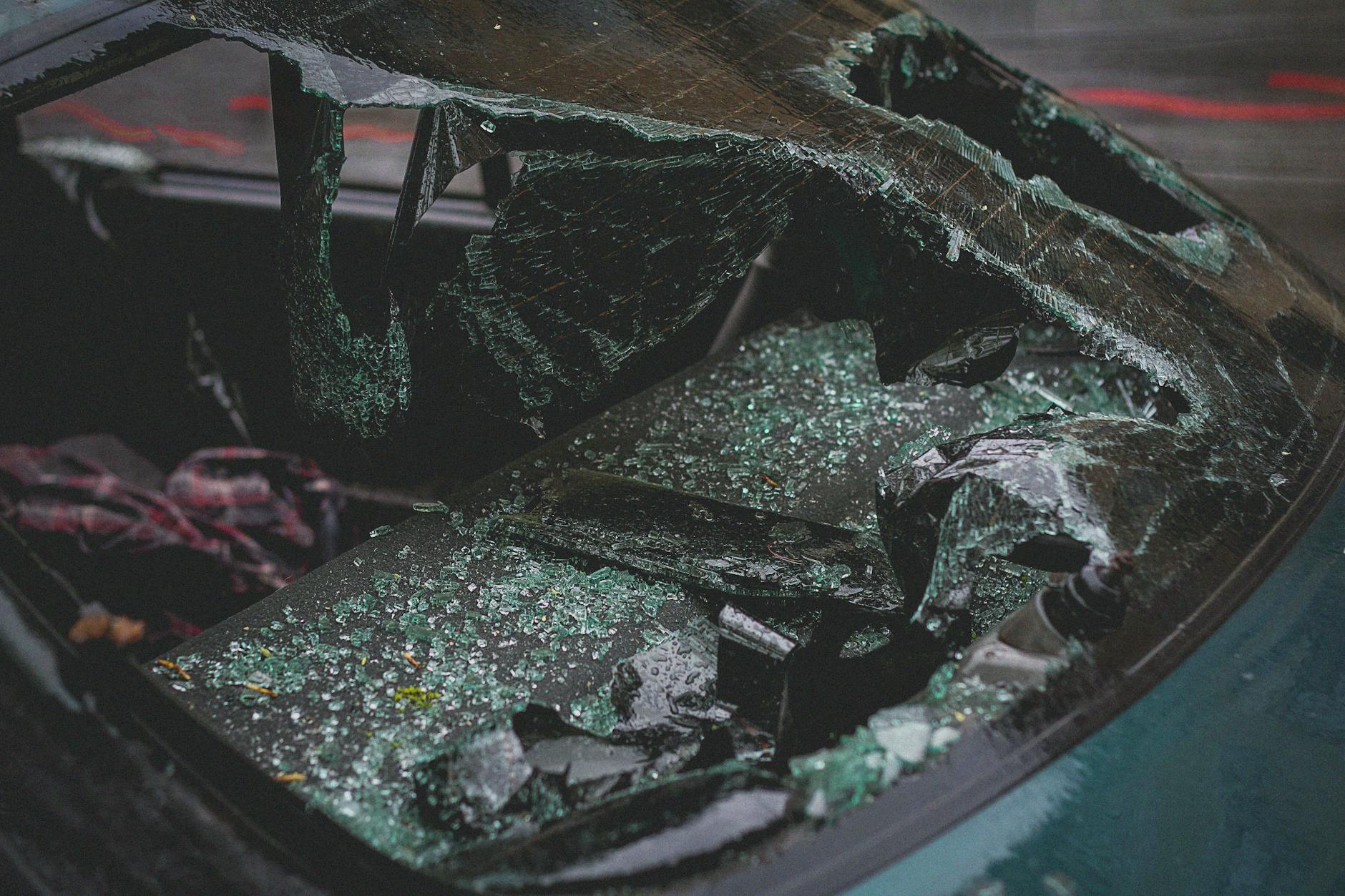
Photo by Artyom Kulakov
What to Do After a Florida Speeding Crash
Your health comes first. Call 911, accept medical attention, and follow the treatment instructions you receive. Some crash injuries become more noticeable hours or days later. Delaying care can also give an insurer an argument that the injury came from something else.
If you can do so safely, take photographs and video before the vehicles leave. Capture the damage, surrounding lanes, traffic signs, road surface, weather, sight lines, debris, and any visible tire marks. Don’t enter traffic or place yourself in danger to collect evidence.
Ask witnesses for their names and phone numbers. Save dashcam files in more than one location, and don’t edit the original recording. Keep the damaged vehicle available for inspection until you understand whether an expert may need to examine it.
Write down what you remember while the details are fresh. Include the direction of travel, approximate traffic conditions, statements made by the other driver, and anything you noticed before impact. Avoid guessing about speed or fault. A simple statement such as “I don’t know” is safer than an inaccurate estimate.
You should also:
- Report the crash as required and obtain the report number.
- Notify your insurer with basic facts, without speculating about liability.
- Save medical bills, prescriptions, wage records, and repair estimates.
- Avoid social media posts about the collision, your injuries, or physical activities.
- Avoid signing a release or accepting a final settlement before reviewing your losses.
You can request records through the Florida crash report system, although access and timing depend on the report and agency involved. A lawyer may also seek nearby video, 911 recordings, vehicle data, cell phone records, maintenance records, and commercial driver logs when those materials relate to the crash.
Evidence can disappear for ordinary reasons. A store may overwrite video, a vehicle may go to a salvage yard, and road conditions may change after a storm. Contact a qualified Florida personal injury attorney promptly if you suspect speed caused your injuries. Early legal action may help preserve records that you can’t obtain on your own.
Fault, Compensation, and Florida Claim Deadlines
The driver’s speeding is only one part of the financial claim. Depending on the facts, compensation may include medical treatment, future medical care, lost income, reduced earning ability, vehicle damage, and pain-related losses. A fatal crash may lead to a wrongful death claim with different damages and legal requirements.
Florida also follows a modified comparative fault system. Under section 768.81, a person’s recovery generally decreases by that person’s percentage of fault. A claimant who is more than 50% responsible for the harm may be barred from recovering damages. For example, a $100,000 award could be reduced to $70,000 if the injured person was 30% at fault.
The Florida comparative fault statute makes the evidence especially important when an insurer argues that you contributed to the crash. The defense may point to lane position, sudden movement, phone use, worn tires, or failure to follow traffic signals. The answer depends on the facts and available proof.
Florida generally gives an injured person two years to file a personal injury lawsuit for claims covered by section 95.11(4)(a), though exceptions and special rules may apply. Claims involving government entities, wrongful death, minors, or different legal theories can have separate requirements. Waiting until the deadline approaches can leave too little time to investigate.
Insurance companies may ask for a recorded statement, broad medical authorization, or quick settlement. Those requests don’t necessarily mean the insurer has evaluated the full value of your claim. Before signing documents or giving detailed statements, consider discussing the request with an attorney.
Lyons & Snyder represents people injured in car, truck, motorcycle, bicycle, scooter, rideshare, and pedestrian crashes across South Florida, including the Florida Keys. The firm offers free consultations, a no recovery, no fee arrangement, and Spanish-language support. Call 954-462-8035 to discuss a speeding collision and the evidence available in your case.
Conclusion
Speeding can help establish negligence, but the claim must connect the driver’s conduct to the collision and your injuries. Police reports, video, witness accounts, vehicle data, roadway evidence, and medical records can make that connection stronger.
Preserve evidence before it disappears, avoid guessing about fault, and seek medical care promptly. A Florida personal injury attorney can review the available proof, address comparative fault arguments, and explain the deadline that applies to your claim.