
Florida Sun Glare Accident Claims: How to Prove Fault
A few seconds of Florida sunlight through a windshield can hide a stopped vehicle, traffic signal, or pedestrian. When a crash follows, Florida sun glare accident claims often turn on what the driver did before impact, not simply on whether the sun was bright.
Sun glare may explain a collision, but it doesn’t automatically excuse careless driving. Fault depends on the facts, the available evidence, and whether each driver responded reasonably to the conditions. The right evidence can show whether the other motorist slowed down, used a visor, cleaned the windshield, or continued driving without a clear view.
Key Takeaways
- Sun glare alone doesn’t decide liability. Investigators must examine the driver’s choices and the full crash scene.
- Photos, video, witnesses, crash reports, medical records, and timing details can help prove what happened.
- Florida’s modified comparative negligence rule can reduce recovery if you share fault, and a fault finding above 50% can bar recovery in a negligence action.
- Report the crash, seek medical care, preserve evidence, and avoid guessing about fault when speaking with an insurer.
- A qualified Florida car accident attorney can investigate quickly before surveillance footage and other evidence disappear.
When Sun Glare May Support a Negligence Claim
Every driver has a responsibility to operate a vehicle with reasonable care under current road conditions. That responsibility includes adjusting speed and following distance when visibility drops.
A driver facing intense sunlight may need to slow down, use the sun visor, clean the windshield, turn on headlights, or stop when continuing would be unsafe. The proper response depends on traffic, road design, speed, weather, and the driver’s ability to see.
Sun glare claims often involve crashes that happen near sunrise or sunset. The angle of the sun may shine directly into a driver’s eyes on roads running east or west. Reflections from wet pavement, nearby vehicles, glass buildings, or road signs can make visibility worse.
However, the other driver may argue that the glare was sudden and unavoidable. That defense can matter, but it doesn’t settle the claim. Evidence may show that the driver had enough time to reduce speed or that the same visibility problem affected every motorist on the road.
Bright sunlight may explain why a driver failed to see danger, but the legal question is whether a careful driver would have changed course after visibility became limited.
A driver who couldn’t see clearly but continued at the same speed may have made a different choice than a driver who slowed and still encountered an unexpected hazard. Police findings, witness accounts, vehicle data, and accident reconstruction may help separate those situations.
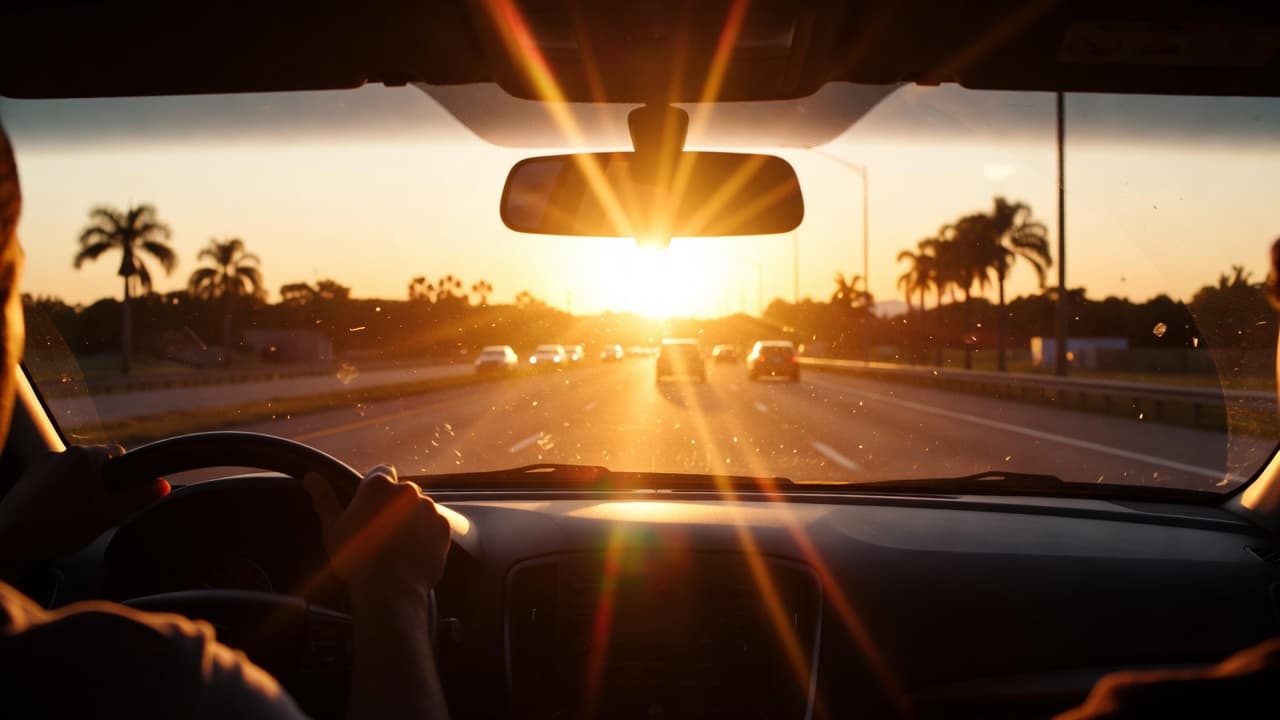
Sun position, road direction, traffic conditions, and driver response can all matter after a glare-related collision.
Evidence That Can Strengthen Florida Sun Glare Accident Claims
Evidence should focus on visibility and driver behavior. A statement that “the sun was in my eyes” is a starting point, not proof of fault.
Begin by recording details while they remain fresh. Write down the crash time, direction of travel, road location, lane position, traffic conditions, and where the sun appeared in relation to the roadway. If you can do so safely, photograph the road from the driver’s approach. Take pictures of the windshield, dashboard, sun visor, road surface, vehicle damage, and nearby sight obstructions.
Useful evidence may include:
- The Florida crash report, including officer observations and citations
- Photos and video from the scene, nearby businesses, traffic cameras, and dashcams
- Names and contact information for witnesses
- Vehicle damage patterns and debris locations
- Vehicle event data, when available
- Medical records, bills, work records, and proof of missed income
- Weather and daylight information for the exact date and time
- Messages or statements from the other driver about glare or visibility
Surveillance footage can disappear quickly. Ask nearby stores, gas stations, offices, and residences whether cameras captured the road. A lawyer may send a preservation request before the business overwrites the recording.
Witnesses can also help establish what the driver did. Someone may have seen the vehicle continue at highway speed, drift into another lane, brake late, or fail to respond to stopped traffic. A witness who noticed the sun glare but saw other vehicles slow down may provide useful context.
Avoid altering or discarding damaged property. Keep your vehicle, child safety seat, bicycle, helmet, clothing, and other items connected to the crash. Insurers and experts may need to examine them later.
Medical documentation matters even when injuries seem manageable at first. Neck pain, back injuries, concussions, and emotional symptoms may develop over time. Follow medical advice and explain all symptoms accurately. Gaps in treatment can give an insurer an argument that the crash did not cause your condition.
Florida Sun Glare Accident Claims and Comparative Negligence
Florida uses a modified comparative negligence system in many negligence cases. Under Section 768.81 of the Florida Statutes, a person’s damages can be reduced by that person’s percentage of fault. A claimant assigned more than 50% fault generally can’t recover damages in a negligence action.
For example, suppose a jury finds that another driver caused a glare-related crash but assigns you 20% fault for following too closely. A $100,000 award could be reduced to $80,000. If the jury assigns you 51% fault, the modified rule may prevent recovery in that negligence action.
The percentages depend on evidence. An insurer may claim you were speeding, distracted, following too closely, or failed to react. You may need evidence showing that the other driver had the better opportunity to avoid the collision.
Comparative fault can also involve more than two drivers. A chain-reaction crash may raise questions about each motorist’s speed, following distance, braking, and reaction time. The final result may depend on how the evidence establishes each person’s conduct.
The Florida Senate’s statutory text also describes proportional reduction based on a claimant’s share of fault. Because legal deadlines and rules can depend on the date and type of claim, don’t rely on a general online explanation to make decisions about your case.
Insurance Claims and Compensation After a Glare Crash
Florida’s no-fault insurance system may make your own personal injury protection coverage an early source of benefits after a crash. PIP coverage can help with certain medical expenses and lost income, subject to policy limits and legal requirements. Your coverage, the severity of your injury, and the claim facts all matter.
A claim against the other driver may also be available when the evidence supports negligence and your injuries meet Florida’s legal requirements for pursuing damages beyond PIP. Potential losses may include:
- Emergency care, surgery, medication, therapy, and future medical treatment
- Lost wages and reduced ability to earn income
- Pain, disability, scarring, and limits on daily activities
- Vehicle repairs or replacement and other property damage
- Out-of-pocket expenses related to treatment and recovery
The other driver’s insurer may ask for a recorded statement soon after the crash. Give required notice and basic facts, but don’t speculate about the sun’s position, your speed, or what you think caused the impact. Don’t say that you feel fine if you haven’t received medical evaluation. A casual statement can later appear in the claim file without the surrounding context.
Adjusters may also focus on an early settlement before doctors understand the full injury. Signing a release can end your ability to seek more money for later treatment. Review any settlement offer carefully before accepting it.
If a loved one dies after a glare-related collision, surviving family members may have a wrongful-death claim. Those cases involve separate rules and potential losses, including funeral expenses, lost support, and the family’s emotional and financial harm.
When to Consult a Florida Car Accident Attorney
Prompt legal advice can help protect evidence and prevent avoidable claim mistakes. A qualified Florida car accident attorney can review the crash report, inspect vehicle damage, identify witnesses, request video, and assess whether an accident reconstruction specialist may help.
Legal guidance is especially useful when the other driver denies glare, blames you, leaves the scene, has limited insurance, or caused serious injuries. It also helps when treatment continues, your income has been affected, or an insurer pressures you to settle.
Bring your insurance information, photographs, medical records, bills, wage information, witness details, and every letter or message from an insurer to the consultation. Ask how the attorney handles fees, case expenses, communication, and litigation if settlement talks fail. Some injury firms, including Lyons & Snyder, offer free consultations and work on a no-recovery, no-fee basis, but the fee agreement should always be explained before representation begins.
Disclaimer: This article provides general information, not legal advice. It doesn’t establish an attorney-client relationship or predict the result of any claim. Florida deadlines, insurance rules, and liability issues depend on the facts of each case. Speak with a qualified Florida car accident attorney promptly about your situation.
Conclusion
Sun glare can create a serious visibility problem, but it doesn’t decide fault by itself. The strongest Florida sun glare accident claims connect the conditions to the driver’s response through photographs, video, witnesses, crash records, medical proof, and other reliable evidence.
Report the collision, get medical care, preserve every relevant record, and avoid admitting responsibility before you understand what happened. A prompt case review can help protect your rights while the evidence is still available.