
Florida Phantom Vehicle Claims After No-Contact Crashes
A crash can happen without a single point of impact. A car cuts you off, forces you into a curb or guardrail, then disappears, and you are left with damage, pain, and a hard insurance question.
In Florida, a no-contact crash can still support a claim. The catch is that these cases live or die on proof, coverage, and deadlines.
If the other driver cannot be found, the claim often turns on your own uninsured motorist coverage, your PIP benefits, and the evidence you gather in the first few minutes. That is where these cases either get built or fall apart.
Key Takeaways
- A no-contact crash can still lead to a valid Florida claim, but it usually needs strong evidence.
- Florida treats unidentified hit-and-run drivers as uninsured for many UM claims.
- If there was no physical contact, witness statements, video, or other corroborating proof can make a huge difference.
- PIP usually pays first, but UM coverage can matter when the other driver vanishes.
- Insurance claims and lawsuits are not the same thing, and they follow different rules and deadlines.
What Counts as a No-Contact Crash in Florida
A no-contact crash happens when another driver’s actions cause the wreck, but the other vehicle never touches yours. Common examples include a lane change that forces you off the road, a sudden merge that sends you into a barrier, or a brake-check that makes you swerve and lose control.
Phantom vehicle claims usually involve a driver who is never identified. In Florida, that matters because the law and the policy language often treat an unknown fleeing driver like an uninsured motorist for coverage purposes. For a plain-English overview of that coverage, the Florida Bar’s consumer tip on uninsured motorist coverage is a useful place to start.
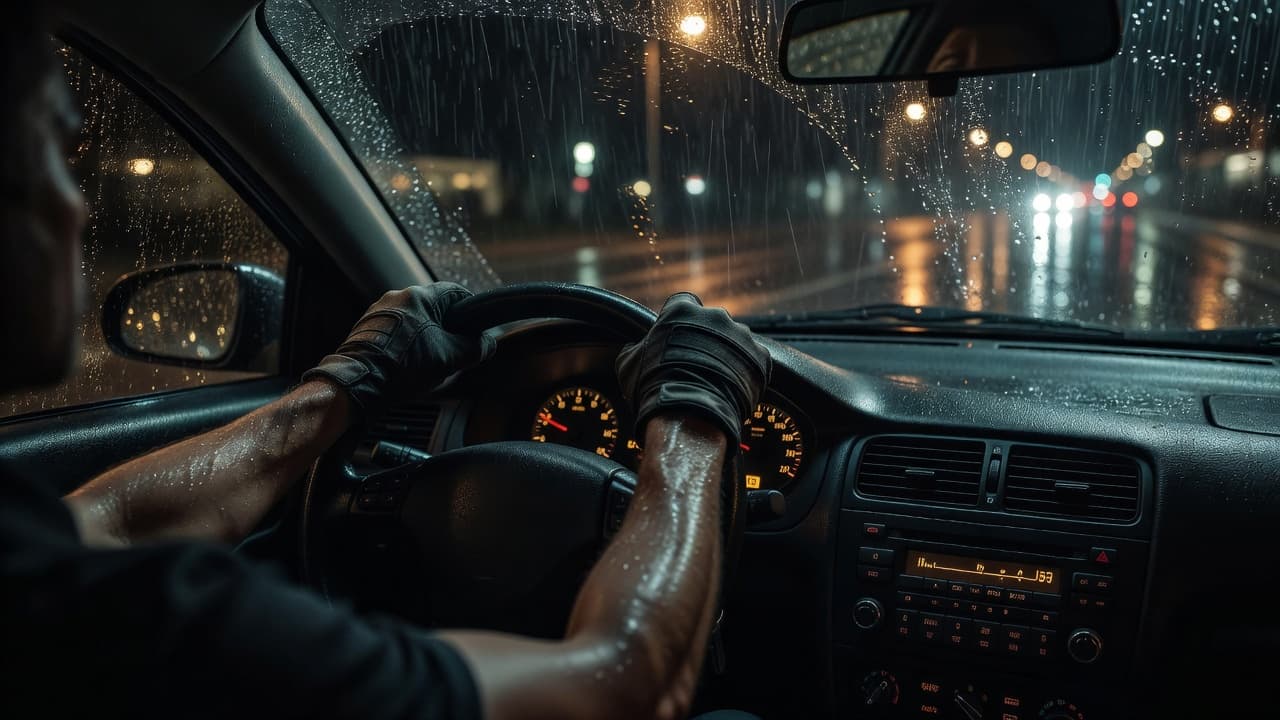
The hardest part is not telling the story. It is proving it. If the only witness is the person in the other car, and that person is gone, the insurance company will look for gaps fast.
When a Phantom Vehicle Claim Can Work
Florida still allows these claims in the right situation, but the proof rules matter. Under Florida’s UM statute, insurers must offer uninsured motorist coverage equal to your bodily injury limits unless you reject it in writing.
That coverage can become the main path to recovery when the at-fault driver cannot be found. Florida does not require bodily injury liability coverage for every driver, so UM coverage can matter even more than people realize.
Physical contact helps, but it is not the whole story
Some phantom vehicle claims are easier because there was actual contact. A sideswipe, a bumper tap, or debris that clearly came off another vehicle can make the case much cleaner.
No-contact claims can still work, but they need corroboration. A neutral witness, dashcam footage, a nearby business camera, or a police report that captures the event can help fill the gap. A detailed Florida phantom vehicle accident guide explains why that outside proof matters so much.
The missing driver is often less important than the missing evidence.
As of 2026, Florida still lets drivers choose stacked or non-stacked UM coverage, and a written rejection is what matters if you turned it down. If you never signed one, your policy may still contain more protection than you think.
What to Do in the First Hour After the Crash
The first hour matters because memories fade fast and small details vanish even faster. If you are able, slow down and focus on facts, not guesses.
- Call 911 and report the crash.
- Tell the dispatcher that another vehicle may have caused the wreck, even if it did not touch you.
- Get medical help right away, especially if you hit your head, feel pain, or feel dizzy.
- Take photos of the scene, your car, road debris, skid marks, traffic signs, and nearby property damage.
- Ask nearby drivers, pedestrians, or business workers whether they saw the other vehicle.
- Do not give a recorded statement until you understand what coverage may apply.
Photo by Mikhail Nilov
That last step matters more than people think. Insurance adjusters often ask early questions that sound routine, but the answers can shape the rest of the claim.
Also, if you can get medical care within 14 days, do it. Florida PIP rules can depend on quick treatment, and waiting can create a second problem on top of the crash.
Evidence That Strengthens a Phantom Vehicle Claim
A phantom vehicle claim is much easier to support when the evidence tells the same story from more than one angle. The best claims usually include a mix of scene proof, medical proof, and independent witness proof.
The strongest evidence often includes:
- A police report that records the date, time, location, and what you told the officer
- Photos of damage to your car, the roadway, and any debris
- Dashcam footage or nearby surveillance video
- A witness statement from someone who was not riding with you
- Medical records that connect your injuries to the crash
- Pay stubs or employer records if you missed work
Small details can matter too. If a tire tread, mirror piece, or bumper fragment came from another car, keep it. If a driver from a nearby business saw the event, ask for a name and phone number right away.
The best cases usually have proof that does not depend on your memory alone. That is why no-contact claims are often won or lost in the first day.
Insurance Claim vs Personal Injury Lawsuit
People often use these terms like they mean the same thing. They do not.
An insurance claim is usually made against your own insurer under PIP, collision, or UM coverage. A personal injury lawsuit is a court case that seeks damages from a person or company that caused the crash, or sometimes from an insurer under the policy.
Here is the difference in plain terms:
| Issue | Insurance claim | Personal injury lawsuit |
|---|---|---|
| Who you deal with | Your insurer or the other side’s insurer | A defendant in court, or your insurer in a UM case |
| Main goal | Get benefits or a settlement | Prove legal fault and recover damages |
| Proof needed | Policy language, medical records, crash evidence | Negligence evidence, damages, and legal deadlines |
| Time frame | Often starts right after the crash | Usually follows if the claim stalls, denies, or misses fair value |
The big takeaway is simple. A claim can be handled without filing a lawsuit, but a lawsuit may become necessary if the insurer denies the loss, blames you unfairly, or refuses to value the injuries honestly.
Florida also uses different deadlines for different claims. Negligence cases tied to a crash usually have a two-year clock, while a UM lawsuit can follow a different contract-based deadline. Waiting too long can turn a valid case into a dead one.
Common Mistakes That Hurt These Claims
A few mistakes show up again and again in phantom vehicle cases.
- Waiting too long to get medical care
- Forgetting to call the police
- Assuming no contact means no claim
- Giving a recorded statement too soon
- Leaving out witness names or video sources
- Missing notice deadlines under the policy
Another common mistake is ignoring UM coverage because the at-fault driver was never found. Florida drivers are not required to buy UM, but insurers must offer it, and the coverage can be the difference between a paid claim and an unpaid one.
If your policy has UM, read the declarations page and the rejection forms carefully. If your claim depends on a witness, make sure the witness is truly independent. A passenger from your own car can help, but a neutral witness usually carries more weight.
Conclusion
A no-contact crash does not automatically close the door on recovery. In Florida, a phantom vehicle claim can still work when the evidence is strong, the coverage is right, and the deadlines are handled early.
The important part is to treat the crash like a proof problem, not just a damage problem. Get the report, protect the medical records, save the photos, and identify any witness who saw the other car disappear.
This article is for general information only and is not legal advice.