
Florida Emergency Vehicle Crash Claims: Who Pays?
Florida emergency vehicle crash claims can be brought when a police car, ambulance, fire truck, or other government vehicle causes a negligent collision. Usually, the claim is directed against the responsible government agency under Florida’s limited waiver of sovereign immunity, not automatically against the individual driver.
The process has extra rules that don’t apply to an ordinary car accident. Emergency driving privileges, notice requirements, damage caps, and special deadlines can all affect recovery. Understanding those rules early helps protect your rights.
How Florida emergency vehicle crash claims are assigned
The first question is who owned and operated the emergency vehicle. A city police department, county fire-rescue service, sheriff’s office, or state agency may be responsible when its employee caused the crash while performing official duties.
Florida law generally allows a government entity to face liability in the same way a private person would under similar circumstances. However, that waiver is limited. The claim must fit within the requirements of Florida’s sovereign immunity law, including its notice rules and financial limits.
For example, a city may face a claim if a police officer runs a red light while responding to a call and strikes another vehicle. A county may face liability if an ambulance driver makes an unsafe turn or follows too closely. The facts matter because emergency status alone doesn’t establish fault.
A private ambulance company is different. If a private company owns the ambulance, the claim may proceed under ordinary negligence and insurance rules instead of the government claim process. A government contract doesn’t automatically give a private company government immunity.
The Florida sovereign immunity statute explains how claims against the state and its agencies or subdivisions work.
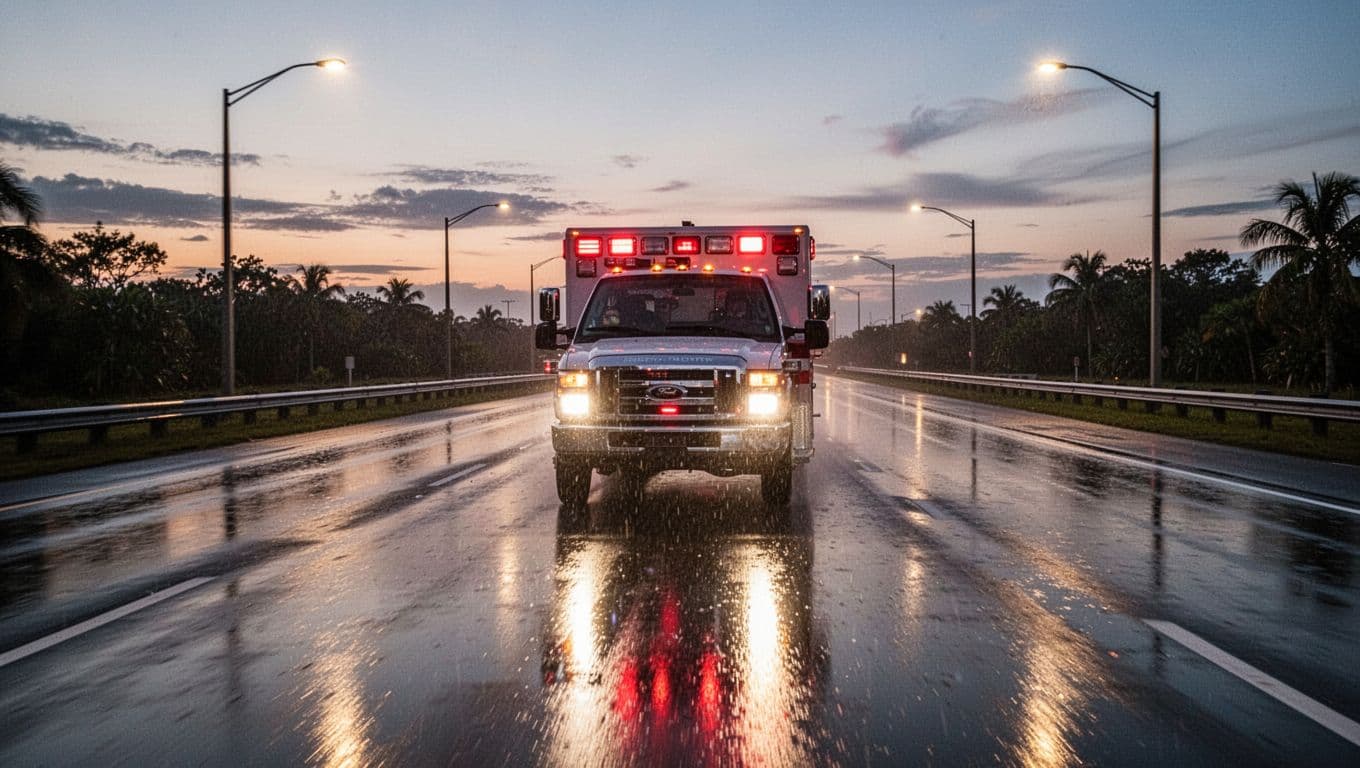
Emergency driving privileges don’t erase negligence
Florida gives authorized emergency vehicles certain traffic privileges during emergency responses. Depending on the circumstances, a driver may be allowed to exceed a speed limit, proceed through a red light after slowing, or disregard some traffic rules.
Those privileges have limits. The driver must still operate the vehicle with due regard for everyone’s safety. Emergency status doesn’t protect conduct that amounts to reckless disregard for other people.
A siren may explain why a vehicle entered an intersection, but it doesn’t prove that the driver approached safely. Investigators may examine whether the emergency vehicle slowed, whether warning lights and sirens were active, how fast it traveled, traffic visibility, and whether the driver could see cross traffic.
The agency’s policies may also matter. Dispatch records, training materials, vehicle video, GPS data, radio traffic, and witness accounts can show what happened before impact. A driver who had the right to respond may still have handled the intersection or roadway unsafely.
Liability can also depend on the driver’s employment status. When a government employee acts within the scope of employment, the agency is usually the primary defendant. Florida law generally protects the employee from personal liability unless the employee acted in bad faith, with a malicious purpose, or with wanton and willful disregard for human rights or safety.
What compensation may be available?
A successful claim may seek payment for losses caused by the crash. The value depends on the injury, treatment, work impact, lasting limitations, and available insurance or government funds.
Potential damages may include:
- Emergency care, hospital bills, medication, rehabilitation, and future medical treatment.
- Lost wages, reduced earning ability, and time away from work.
- Vehicle damage and other property losses.
- Physical pain, emotional distress, scarring, and loss of enjoyment of life.
- Wrongful-death damages available to eligible survivors when the crash proves fatal.
Your own automobile insurance may also play a role. Florida personal injury protection coverage can help pay some medical expenses after a collision, even while fault and government liability are investigated. Notify your insurer, but avoid giving a recorded statement about fault before you understand the claim.
The agency may argue that some treatment was unrelated, unnecessary, or caused by a prior condition. Consistent medical records help connect the injury to the crash. Keep bills, appointment records, work documentation, prescriptions, and notes about symptoms.
Deadlines and government liability caps in Florida
Government claims have a separate notice process. Under section 768.28, a claimant generally must present written notice to the appropriate agency and to Florida’s Department of Financial Services within three years after a personal injury claim accrues. A wrongful-death claim generally has a two-year notice period.
A lawsuit usually cannot begin until six months after the required notice is presented, unless the agency denies the claim earlier. That waiting period is different from the deadline for giving notice.
The six-month waiting rule and the three-year notice deadline are separate requirements. Meeting one doesn’t automatically satisfy the other.
The current statutory text lists a general recovery limit of $200,000 for one person and $300,000 for all claims arising from one incident. If several people suffer injuries in one emergency vehicle crash, the incident cap can restrict the total amount recoverable from the government entity.
The law also generally bars punitive damages and prejudgment interest against the state or its subdivisions. A claimant who seeks more than the statutory limit may need a legislative claims bill. A claims bill is a separate process and isn’t automatic.
Because legislation can change the limits and deadlines, review the Florida Senate’s codified section 768.28 before relying on a cap or filing date. A Florida injury attorney should confirm which law applies to the date your claim accrued.
Evidence can determine whether the claim succeeds
Emergency vehicle crashes often produce more evidence than ordinary collisions, but that evidence may not remain available forever. A prompt investigation can help preserve it.
Important records may include the crash report, photographs, 911 recordings, dispatch logs, radio communications, body-camera footage, dashboard video, traffic-camera footage, vehicle maintenance records, and electronic data showing speed or braking. Witness names and phone numbers can also become difficult to locate later.
Your lawyer may send preservation requests and public-records requests to the agency. Some records may be restricted or redacted because of privacy, active investigations, or other legal exemptions. Still, an early request can reduce the chance that routine retention practices remove important information.
Take photographs of the vehicles, roadway, traffic signals, lighting, debris, and visible injuries. Save copies of every document. Don’t repair or discard damaged property until photographs and inspections are complete.
Fault may be shared. Florida’s comparative negligence rules can reduce recovery if the injured person contributed to the collision. Statements such as “I didn’t see the vehicle” or “I was probably going too fast” can be taken out of context, so describe the facts carefully and avoid guessing.
What to do after a crash with a government vehicle
Seek medical care promptly, even if pain seems manageable. Some injuries become more obvious hours or days after impact. Tell the provider that the symptoms began after the crash and follow reasonable treatment instructions.
Report the collision and obtain the incident number. Collect the emergency vehicle’s agency information, driver’s name if available, insurance details, witness contacts, and photographs. Don’t argue with the driver or post accusations, videos, or injury updates on social media.
Notify your insurance company of the collision, but don’t sign a release from a government insurer before reviewing the full value of your losses. A quick settlement can leave future treatment, lost income, or permanent limitations unpaid.
Florida emergency vehicle crash claims require careful deadline tracking. Lyons & Snyder offers free consultations and handles injury cases on a no-recovery, no-fee basis. The firm can be reached at 954-462-8035, and Spanish-language assistance is available.
Frequently asked questions
Can I sue the police officer who caused the crash?
Usually, the government agency is the primary defendant when the officer acted within the scope of employment. The employee may have personal exposure if the conduct involved bad faith, a malicious purpose, or wanton and willful disregard for safety. The facts and available evidence determine whether that exception applies.
Does an emergency vehicle always have the right of way?
No. Emergency vehicles receive certain traffic privileges during emergency responses, but drivers must still use due care. A vehicle’s lights and siren don’t eliminate the duty to approach an intersection or roadway safely.
What if more than one person was hurt?
The government claim cap may apply to the entire incident, not separately to each injured person. Under the current statutory text, the general limit is $300,000 for all claims arising from one occurrence, subject to the specific law and facts involved.
How long do I have to file?
A personal injury claim against a Florida government entity generally requires written notice within three years, while wrongful-death notice generally has a two-year deadline. A six-month waiting period may also apply before filing suit. Other limitation rules can affect the case, so speak with a qualified Florida attorney as soon as possible.
Should I accept the agency’s insurance settlement?
Don’t accept a settlement until you understand your medical outlook, wage losses, future care, applicable caps, and all potential defendants. Signing a release usually ends the claim, even if additional treatment becomes necessary.