
Florida Pothole Accident Claims and Notice Deadlines
Last updated: [Insert future legal review date]
One deep pothole can turn a routine Florida drive into a crash, injury, and dispute over who pays. Florida pothole accident claims against a city, county, or state agency require more than photos of damaged asphalt. You must connect the defect to the government entity, show it had enough notice to act, and follow written notice rules before suing.
These cases can involve drivers, passengers, cyclists, and pedestrians. The process changes depending on whether the road belongs to FDOT, a county, a city, or a private owner. This article provides general information, not legal advice.
How Florida pothole accident claims work against a public entity
Florida governments aren’t automatically responsible for every pothole. A successful claim usually requires proof that:
- A dangerous road condition existed.
- The government entity had actual or constructive knowledge of it.
- Officials had a reasonable opportunity to repair or warn about the defect.
- The pothole caused the crash or injury.
- You suffered legally recognized damages.
Actual knowledge may come from a prior complaint, inspection report, work order, or employee observation. Constructive knowledge may exist when the defect lasted long enough that reasonable inspections should have discovered it. A pothole that appeared minutes before a crash creates a different proof problem than one documented repeatedly over several months.
Florida’s sovereign immunity law limits when and how people can sue public entities. Florida Statutes section 768.28 requires written notice to the appropriate government agency. For most claims against the state or a state agency, the claimant must also notify the Florida Department of Financial Services.
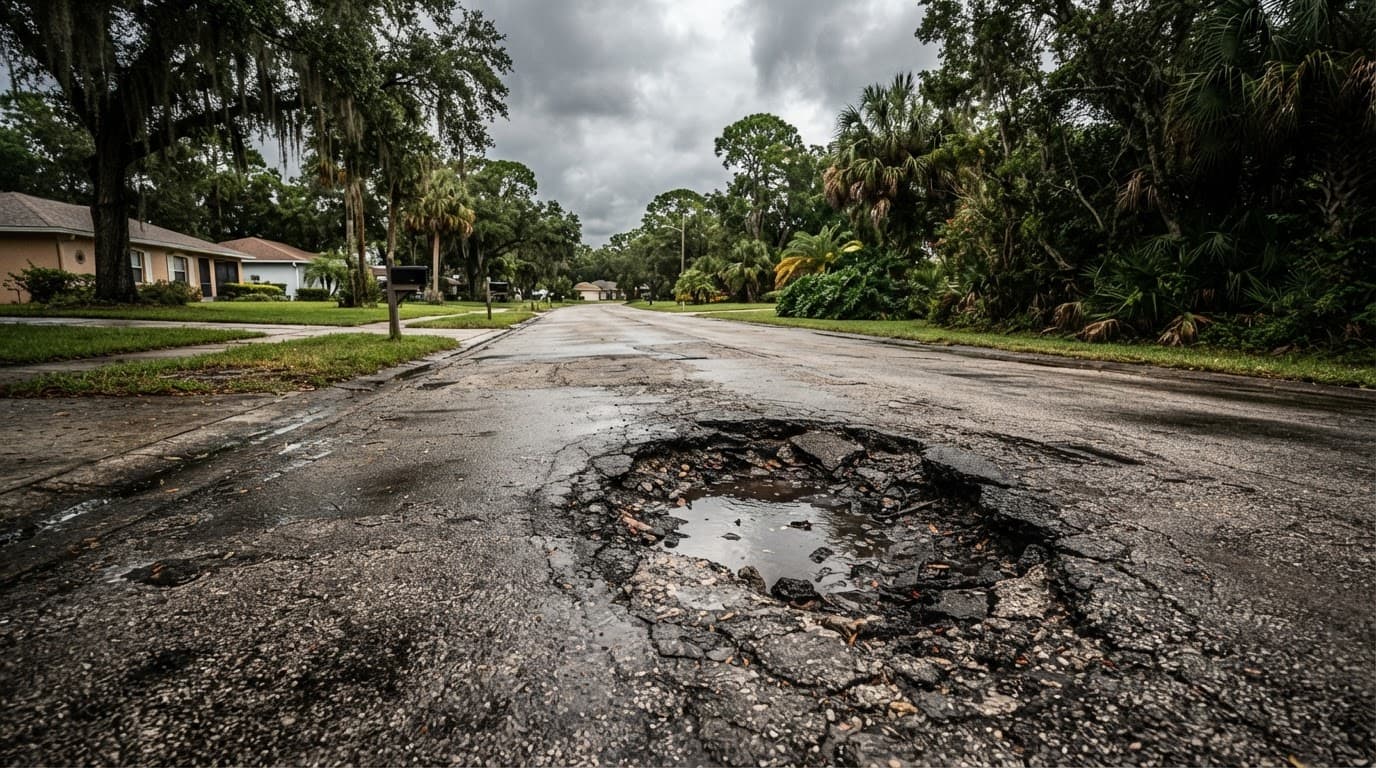
Road location doesn’t always identify the responsible government. A state road may pass through a city while FDOT handles maintenance. A county road may run through a municipality, while a local street may belong to the city. Contractors, developers, or private communities may also have maintenance duties.
Start by identifying the road owner and the agency responsible for repairs. A claim sent to the wrong entity may create problems, especially when time is running.
Florida government notice requirements after a pothole crash
Under section 768.28, written notice generally must reach the appropriate agency within three years after the claim accrues. For claims against the state or state agencies, notice usually must also go to the Department of Financial Services. The statute creates an exception for claims against a municipality, county, or the Florida Space Authority, so separate DFS notice may not be required in those cases.
The notice must give the government enough information to understand what happened and investigate. A strong notice usually identifies the claimant, the date and time of the incident, the exact road location, the pothole or roadway defect, the injuries and property damage, and the compensation being requested. Attach available photographs, crash reports, repair estimates, medical records, and witness information.
A phone call to 311 or an online pothole report can help alert a road department. However, it shouldn’t replace a formal written claim notice. A report made after the crash may help document the condition or prompt repairs, but it doesn’t prove that the government knew about the pothole before your accident.
For state-maintained roads, FDOT’s claims page provides claim forms, electronic submission information, and mailing instructions. The Florida Department of Financial Services claims process also explains how state liability claims move through review.

A lawsuit generally cannot begin until the agency or DFS denies the claim in writing. If the government doesn’t make a final decision within six months after the claim is filed, the statute treats the claim as denied for this purpose.
Don’t confuse the three-year notice period with the deadline for filing a lawsuit. Under current Florida law, negligence actions generally have a shorter two-year statute of limitations, subject to exceptions and rules based on when the claim accrued. Wrongful-death claims have separate requirements, including a two-year notice period under section 768.28. A lawyer should calculate every deadline that may apply.
Evidence that can support a Florida pothole accident claim
Potholes can change after rain, traffic, road work, or repairs. Evidence that seems obvious at the scene may be gone within days. If you can do so safely, document the condition before leaving.
Useful evidence includes:
- Photos from several distances, including the pothole, nearby landmarks, lane position, and damage to the vehicle or bicycle.
- A video showing the roadway, lighting, traffic pattern, and surrounding signs.
- The exact address, intersection, direction of travel, lane, and nearest mile marker.
- Dashcam footage, cell phone location data, and photographs from passengers or witnesses.
- The crash report, tow records, repair estimates, receipts, and insurance communications.
- Medical records that connect the injury to the crash and describe symptoms over time.
Ask the responsible agency for public records such as inspection logs, maintenance schedules, prior complaints, repair orders, and photographs. These records may show how long the defect existed and whether employees had notice. A preservation request can also help prevent relevant video, dispatch records, or electronic reports from being lost under ordinary retention policies.
Medical documentation matters even when the vehicle damage seems minor. Neck, back, shoulder, and head injuries may worsen after the adrenaline wears off. If a motor vehicle was involved, Florida personal injury protection coverage generally requires treatment within 14 days to access PIP benefits, subject to the policy and statutory rules. Seek medical care promptly and describe all symptoms accurately.
What compensation may be available?
The losses in a pothole claim depend on the type and seriousness of the injury. Potential damages may include reasonable medical expenses, future treatment, lost wages, reduced earning ability, pain, disability, and loss of enjoyment of life. Property damage can include vehicle repairs, replacement costs, towing, a rental vehicle, or damage to a bicycle and safety equipment.
A property-only claim still requires proof of government negligence. A repair bill shows the amount of damage, but it doesn’t prove that the public entity knew about the pothole or caused the accident.
Florida law also limits damages against government entities. The statutory limit is generally $200,000 per person and $300,000 per incident, although the Florida Legislature can pass a separate claims bill in some cases. The Florida Senate’s version of section 768.28 contains the current statutory language on immunity, notice, and recovery limits.
Your own insurance may provide an earlier source of payment. Collision coverage may address vehicle damage, while PIP may cover part of medical bills and lost wages. If another driver contributed to the crash, that driver’s insurance may create a separate claim. A private contractor or property owner may also share responsibility if it controlled road maintenance.
Your next step after a Florida pothole accident
Preserve evidence, report the crash, seek medical attention, and identify the road authority before sending notices. Don’t guess about who maintained the road or wait for the pothole to look the same later.
Because public-entity claims combine negligence proof, notice rules, damage limits, and insurance issues, early legal review can prevent a missed step. Lyons & Snyder offers free consultations, handles injury claims on a no-recovery, no-fee basis, and provides Spanish-language assistance.
Florida pothole accident claims FAQ
Can I sue a Florida city for a pothole?
Possibly. You must show that the pothole created a dangerous condition, the city had actual or constructive notice, officials had a reasonable chance to respond, and the defect caused your injury or damage. You must also provide timely written notice under the applicable law.
Do I have to notify the Department of Financial Services?
Usually, DFS notice is required for claims against the state or a state agency. Section 768.28 excludes claims against a municipality, county, and the Florida Space Authority from that separate DFS requirement. The responsible local government still needs proper written notice.
How long do I have to bring a pothole claim?
Section 768.28 generally gives three years to present notice for most claims and two years for wrongful-death notice. The deadline to file a lawsuit may be shorter. Current Florida negligence claims generally have a two-year statute of limitations, but exceptions can apply.
What if the pothole only damaged my car?
You may still have a claim, but you must prove more than the repair cost. Evidence should connect the pothole to the damage and show that the responsible government entity had notice of the dangerous condition. Collision coverage may provide a faster repair option, depending on your policy and deductible.