
South Florida Negligent Security Lawyer: A Guide to Your Claim
By Marc P. Lyons, founding partner and Florida personal injury attorney at Lyons & Snyder
Updated September 2026
If you were injured in an assault on someone else’s property, the owner may be liable if unreasonable security failures contributed to a foreseeable crime. A South Florida negligent security lawyer can investigate what the owner knew, which precautions were missing, and how those failures affected your safety.
You shouldn’t have to work through those questions while recovering physically or coping with psychological trauma. Early evidence often makes a difference, so the first steps matter.
Key Takeaways
- A criminal act doesn’t automatically make a property owner liable. You need evidence connecting a security failure to the harm.
- Prior incidents, complaints, and conditions at the property can help show whether the danger was foreseeable.
- Request police records promptly, but send a separate preservation notice for privately held video and security logs.
- Florida’s 2023 law changes can affect fault allocation. If a case reaches trial, the verdict form may reflect fault assigned to the property owner and other responsible parties. Most negligence lawsuits arising on or after March 24, 2023, have a two-year filing deadline.
When Can a Property Owner Be Liable for a Crime?
Negligent security is a type of premises liability claim. Property owner liability depends on control, foreseeability, and causation. It can arise when someone responsible for a property fails to take reasonable steps against a foreseeable criminal risk, and that failure contributes to an injury. The owner isn’t an insurer against every assault or robbery.
What Must an Injured Person Prove?
A claim generally requires a duty of care, a failure to meet that duty, a connection between the failure and the crime, and measurable harm. Who controlled the property matters. An owner, management company, or operator may control different parts of an apartment building, hotel, or shopping center.
For example, a broken entrance lock matters more when records show management knew about it and the attacker used that entrance. A reasonable repair or precaution may have reduced the risk, and failing to take it may amount to security negligence.
Is This Different From a Slip-and-Fall Claim?
Both involve property safety, but the proof isn’t identical. A fall may turn on how long a spill remained on the floor. A negligent security case often turns on prior warnings, access controls, crime patterns, and how the attacker reached the injured person.
Our South Florida premises liability practice addresses another common property hazard. After an assault, however, the investigation must also account for the criminal act and the property’s response to known risks.
Where Does Inadequate Security Show Up?
Apartment complexes, hotels, parking garages, bars, and shopping centers raise different security questions. At an apartment building, we might examine repeatedly broken gates, exterior doors that don’t latch, and unanswered resident complaints. After a parking garage assault, we may examine adequate lighting, sightlines, patrol records, and access between parking levels.
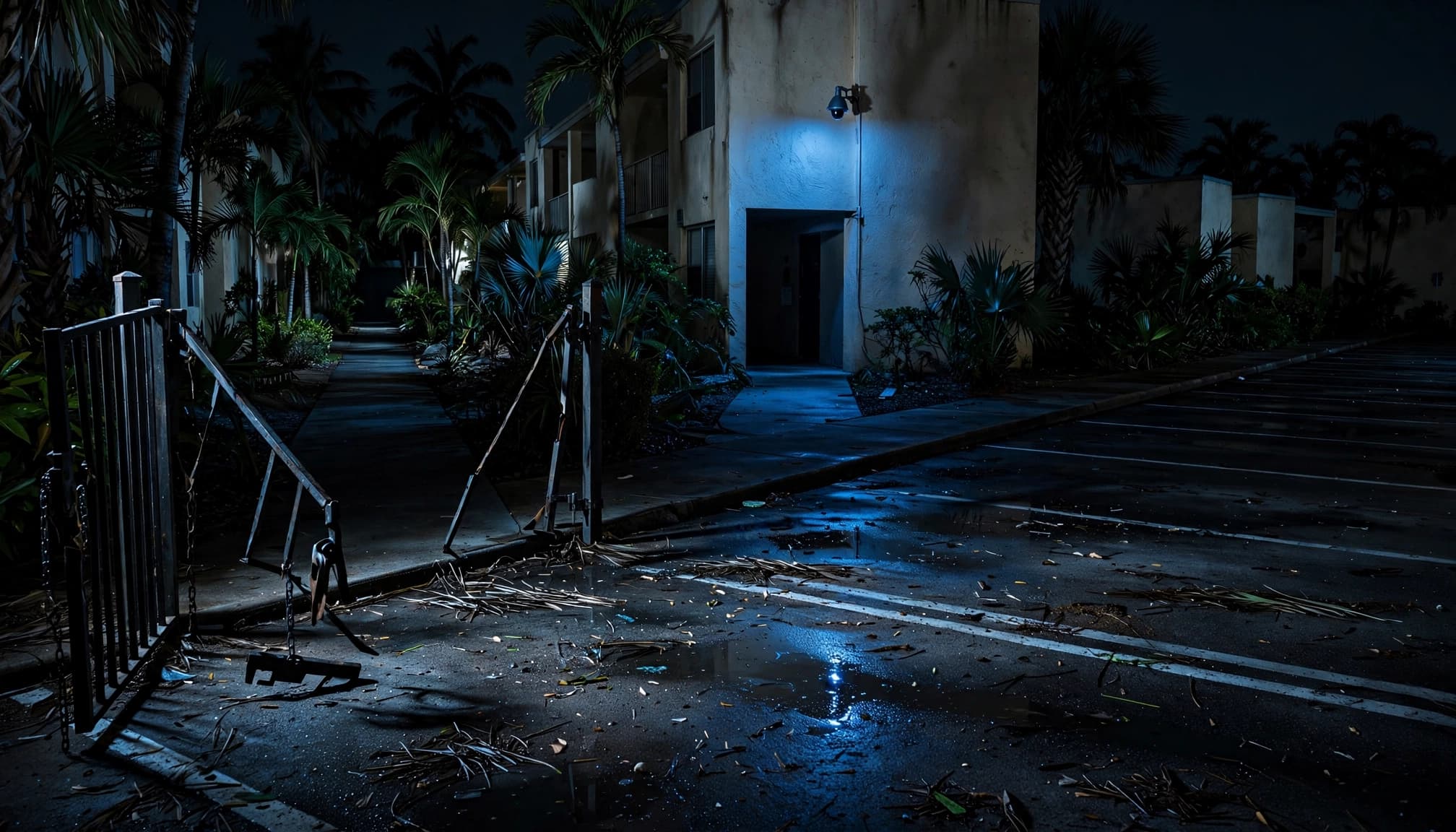
At a bar, relevant evidence may include prior fights, staffing decisions involving security guards, and what employees observed before an attack. Missing security cameras or a burned-out bulb alone doesn’t prove negligence. We look for a specific failure tied to the incident, not a list of security equipment the property could have purchased.
Local rules require the same care. A property in Coral Springs may fall under different municipal requirements than one in Plantation or unincorporated Miami-Dade County. We would check the property’s jurisdiction, applicable rules, permits, inspection history, and code complaints rather than assume one countywide security standard applies everywhere.
How Does Crime History Show Foreseeability?
Foreseeability asks whether the risk was one a reasonable property operator should have anticipated. Prior crimes can be important, but they don’t need to match the new incident in every detail. Their timing, location, frequency, and similarity all deserve scrutiny.
Which Warnings Matter Most?
Police calls at the same address may show a pattern. So can resident complaints, incident reports, security guard logs, and emails about unauthorized entry. A wider area’s crime history adds context, but a report of crime several miles away says less about what management knew at this entrance.
We would also separate calls for service from confirmed crimes. A dispatch entry shows that someone reported an incident; it doesn’t, by itself, establish what happened. Map the records by date and location, then compare them with when management received warnings and what changed afterward.
What Could Reasonable Security Have Looked Like?
Crime Prevention Through Environmental Design, or CPTED, examines how a property’s layout affects risk. Clear sightlines, maintained lighting, controlled access, and visible common areas can make it harder for someone to approach unseen or enter without permission.
That analysis must fit the actual route of an attack. If an assailant entered through a defective pedestrian gate, repair history and access records may matter more than a camera at the front desk. If management fixed the gate weeks earlier, we need to test that fact rather than rely on an old complaint.
How to Preserve Evidence After an Assault
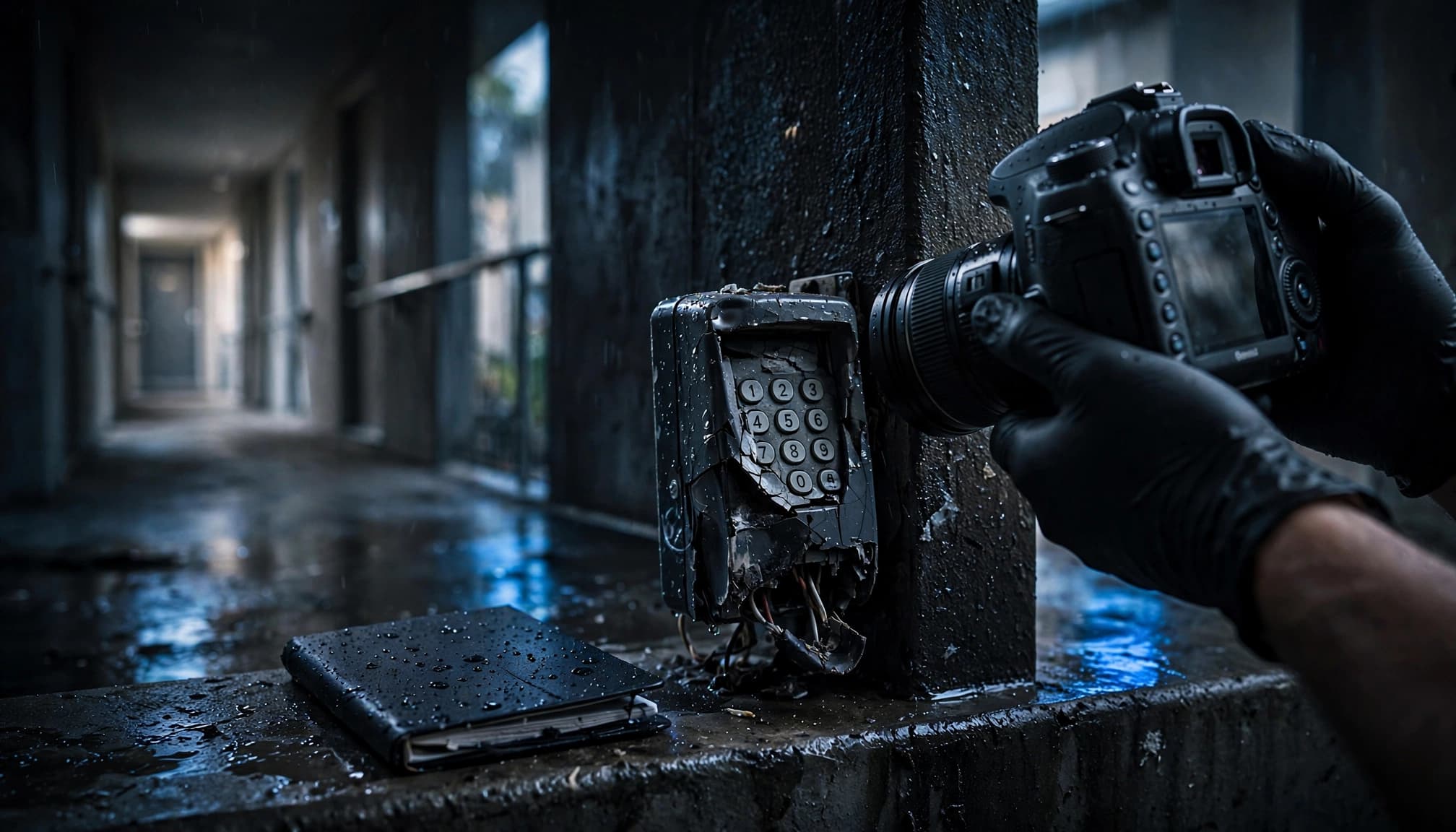
Get to safety and seek medical care first. Report the crime to police, then keep the case number, discharge papers, photographs, witness contacts, and messages sent to the property before the attack, plus counseling records or symptom notes related to psychological trauma. If you can’t document the scene yourself, ask someone you trust to help without entering an unsafe area.
How Can You Protect Private Video and Records?
Identify every likely camera, including those at neighboring businesses. Note the incident’s date, approximate time, entrance, and direction of travel. Video systems can overwrite footage, so ask a lawyer promptly about sending a written preservation notice, sometimes called a spoliation letter, to the owner, manager, and relevant security vendors.
The notice should identify the time window and seek surveillance footage, access-card data, guard schedules, maintenance requests, and incident reports. Don’t assume telling a desk employee about the crime will preserve those materials. Photograph a defective gate or dark walkway if you can do so safely, and save earlier repair complaints.
Which Public Records Should You Request?
Ask the agency with jurisdiction for the incident report, calls-for-service history at the address, dispatch or computer-aided dispatch records, and available 911 audio. Give the address, date, time range, and case number. For a longer crime-history review, ask for a defined period and address rather than a vague request for “everything nearby.”
In Miami-Dade, the correct agency may be the Miami-Dade Sheriff’s Office or a city police department. In Broward, it may be the Broward Sheriff’s Office or municipal police. Fort Lauderdale Police Department directs 911 communications requests to the Broward Sheriff’s Office Audio Evidence Unit. Records can be redacted or unavailable, so request them promptly.
A public-records request isn’t a preservation notice. It doesn’t tell a private property owner to retain video. A lawyer can pursue both tracks while checking local code-enforcement files for earlier complaints about locks, lighting, or gates.
What Changed Under House Bill 837?
Florida’s House Bill 837 took effect on March 24, 2023. It changed rules that can shape the value and presentation of a negligent security claim. The Florida Senate’s HB 837 analysis describes the 2023 changes; the property’s type and the claim’s facts determine which provisions matter.
Can a Jury Assign Fault to the Attacker?
Florida Statute 768.81 sets the general rules for comparative negligence and allocating fault. Separately, Florida Statute 768.0701 applies to covered claims when a third party’s crime injures someone lawfully on commercial or other real property. The factfinder must consider each person’s contribution, including that of a criminal assailant, even if the lawsuit targets only the property owner.
This makes causation evidence especially important. A verdict form may record each person’s share of fault. We would examine what the property operator knew, when a protective measure failed, and how a reasonable response might have changed the attacker’s access or opportunity. The statute doesn’t erase a valid claim, but unsupported assumptions about fault can be costly.
Do Apartment Complexes Have Different Rules?
Florida Statute 768.0706 addresses qualifying multifamily residential properties and provides a presumption against liability when an owner substantially implements specified security measures. Its definition covers certain properties with at least five dwelling units. The law includes conditions involving a CPTED assessment, security measures, and training.
That presumption isn’t a blanket exemption for every apartment complex. A lawyer needs to check whether the property qualifies and whether it met the statutory conditions. The provisions appear in Florida Statutes Chapter 768.
What Damages and Deadlines Apply?
A claim’s value depends on the injury, available proof, and how fault is allocated. A South Florida negligent security lawyer should review the crime’s full impact before discussing a settlement. At trial, the verdict form may allocate fault and affect recovery.
What Losses Can a Claim Include?
Potential economic damages include emergency care, future treatment, counseling, lost income, and reduced earning ability. Non-economic damages may include pain, emotional distress, and psychological trauma, depending on the evidence. Treatment records and a clear account of how symptoms affect work and daily life help document those losses.
If a loved one died, different rules govern who may bring a wrongful death claim and which losses are recoverable. Our wrongful death representation addresses those family-specific questions. No lawyer can responsibly promise a particular payout before reviewing the evidence.
How Long Do You Have to Sue?
For most Florida negligence claims arising on or after March 24, 2023, the statute of limitations is two years from the injury. Wrongful death lawsuits generally have a two-year deadline measured from death. Older incidents and unusual circumstances need individual review.
Opening an insurance claim or discussing a settlement doesn’t, on its own, stop the court filing clock. Still, the practical evidence deadline often comes much sooner: video may be overwritten, repairs may change the scene, and witnesses may become harder to find.
Choosing a South Florida Negligent Security Lawyer
Look for a lawyer who can explain the investigation, not simply quote a possible settlement. Ask which police agency has the records, who controls the cameras, and how the firm will test the link between a security failure and the attack. For a Miami-Dade incident, ask a Miami negligent security lawyer how they would identify records custodians and evaluate surveillance footage. A useful consultation should also address HB 837, any apartment-specific defense, and whether the firm works on a contingency fee basis.
We serve injured people and families across South Florida, including Coral Springs, Parkland, Plantation, Delray Beach, Vero Beach, and Key West. At Lyons & Snyder, we know these conversations may involve painful details. You can ask what information is needed now and what can wait until you feel ready to discuss it. You can also ask whether the firm works on a contingency fee basis.
Frequently Asked Questions
Can an Apartment Complex Be Liable for an Assault?
Yes, a claim after an apartment complex assault may be possible, depending on the facts. A resident or lawful guest may have a claim if the complex failed to address a foreseeable danger and that failure contributed to the attack. Prior warnings, entry records, and the property’s response matter more than the fact that a crime occurred there.
Can You Bring a Claim if the Attacker Was Never Caught?
An unidentified criminal assailant doesn’t automatically prevent a claim against a property owner. You still need proof of the crime, the owner’s security failure, causation, and damages. Identification can help an investigation, but property records and witness evidence may answer important questions without it.
Does Sharing Some Fault End a Florida Claim?
Not necessarily. Florida’s modified comparative negligence rule can reduce recovery based on a claimant’s share of fault and, for applicable claims, generally bars recovery if that share exceeds 50%. A verdict form may show how fault is allocated at trial, but how the law applies alongside fault assigned to an attacker requires a close review of the claim.
Protecting Your Next Step
After an assault, the most useful question is what the property knew and what it could reasonably have done. Preserve the records that can answer it before they disappear.
For a free consultation, call Lyons & Snyder at 954-462-8035. No Recovery No Fee. Hablamos Español.
This article is for informational purposes only and isn’t a substitute for advice from a lawyer about your situation.