
South Florida Boating Accident Claims After a Collision
You may pursue boating accident claims after a South Florida collision when another party’s negligence causes your injuries. Those injuries may support a personal injury claim. Seek medical care, preserve evidence, and determine whether Florida law or federal maritime law governs your case.
A crash on the Intracoastal Waterway, near Key West, or offshore can leave you facing hospital bills and competing insurance companies. We help you pursue financial compensation while you focus on recovery, starting with what needs attention immediately.
By Marc P. Lyons, founding partner of Lyons & Snyder. Marc represents injured people and families throughout South Florida, including boating accident and wrongful death cases in Monroe County and the Florida Keys.
Last Updated: October 2026
Contents: Immediate Steps | Liability | Evidence | Maritime Law and Deadlines | Insurance | Compensation | Frequently Asked Questions
Key Takeaways
- After a boating collision, prioritize medical care and rescue, report qualifying accidents, and preserve evidence only when it’s safe.
- Liability may involve an operator, boat owner, rental company, maintenance provider, manufacturer, or commercial vessel company; evidence helps establish who caused the collision and injuries.
- The collision’s location and circumstances can determine whether Florida law or federal maritime law applies, affecting fault rules, available remedies, and deadlines.
- Insurance coverage and potential compensation depend on the policies, applicable law, documented losses, and proof of responsibility. Don’t assume coverage or a settlement amount without a case-specific review.
- Preserve records and seek legal advice promptly. Evidence can disappear, and insurance notice requirements and lawsuit deadlines are separate.
What Should You Do After a Boating Collision?
Get medical help first, then report the collision and preserve information without putting yourself at risk. Check on passengers and use available life jackets if safe, but don’t delay rescue. You don’t need to settle the fault argument at the scene.
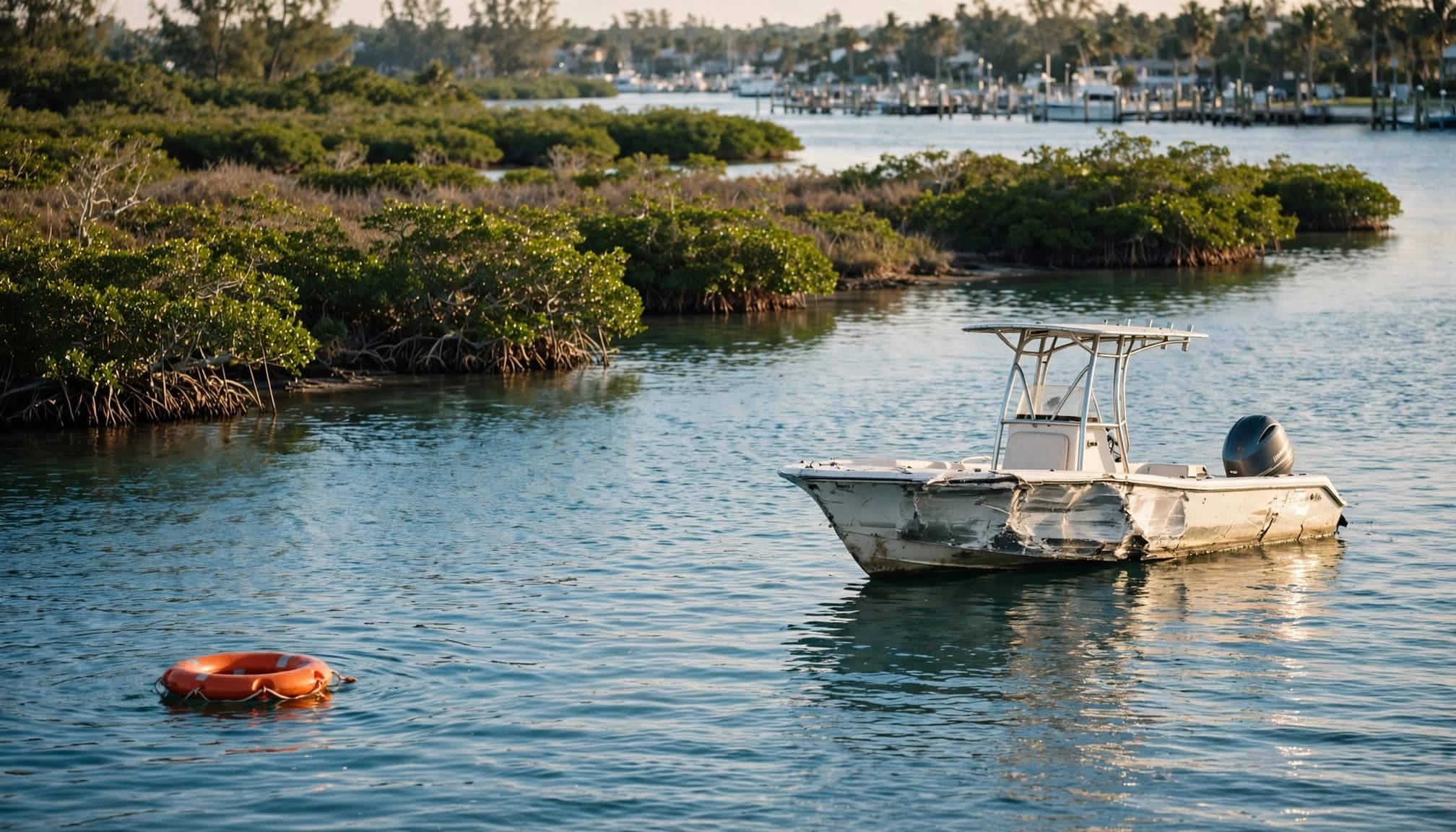
Get Medical Care and Report the Accident
Call 911 when you can reach emergency services. If you’re within radio range, use marine VHF Channel 16 to send a distress call to the U.S. Coast Guard. Give responders your location, vessel description, and the number of injured or missing people.
Under Florida Statute § 327.30, operators must notify a listed law-enforcement agency without delay after certain accidents. These include death, a qualifying disappearance, injuries requiring treatment beyond immediate first aid, or apparent aggregate property damage of at least $2,000.
Seek prompt evaluation after a head impact, near-drowning, or worsening pain. Medical records also document when your symptoms began.
Document the Scene Without Delaying Rescue
If it’s safe, photograph both vessels, registration numbers, impact damage, and the surrounding waterway. Capture navigation lights, channel markers, and weather conditions.
Exchange operator and owner details, insurance information, and witness contacts. Also save the responding agency’s name and incident number.
Keep damaged belongings and original photos. However, don’t remain in an unsafe location to collect evidence. We can investigate later using records, witnesses, and available electronic data.
Who Is Liable in Boating Accident Claims?
The responsible party may be an operator, rental business, maintenance provider, manufacturer, or commercial vessel company. Liability depends on whose conduct caused the collision and your injuries.
Operators and Boat Owners
Operator inattention, excessive speed, boating under the influence, and navigation-rule violations can support a negligence claim. We connect a negligent operator’s unsafe conduct to the collision through physical evidence and witness accounts.
A citation isn’t the only way to prove negligence. Likewise, an accident report doesn’t decide every civil liability issue.
Boat ownership requires separate analysis. We examine negligent maintenance, unsafe entrustment, and applicable limits on owner liability. Simply owning a vessel doesn’t establish responsibility for every permissive user’s mistake.
Rental Companies and Defective Equipment
A rental boat or personal watercraft crash may involve the rental company, not just the renter. Poor maintenance, missing safety equipment, or inadequate required instruction may warrant investigation.
Meanwhile, a steering failure or defective product can raise a product liability claim. Preserve the equipment because repairs or disposal can destroy evidence needed to identify the failure.
We review rental agreements and inspection records rather than assuming the rental company is automatically responsible.
Commercial Towboats, Barges, and Other Commercial Vessels
A collision involving a towboat or barge may involve separate vessel owners, employers, and contractors. We investigate navigation, crew conduct, tow configuration, and equipment condition.
The commercial vessel’s size doesn’t establish fault. Relevant records may include voyage information, maintenance logs, and available tracking data.
What Evidence Helps Prove a Boat Operator Was Negligent?
Strong evidence explains how the vessels moved, what each operator could see, and why the collision happened. Photos matter, but they rarely tell the whole story.
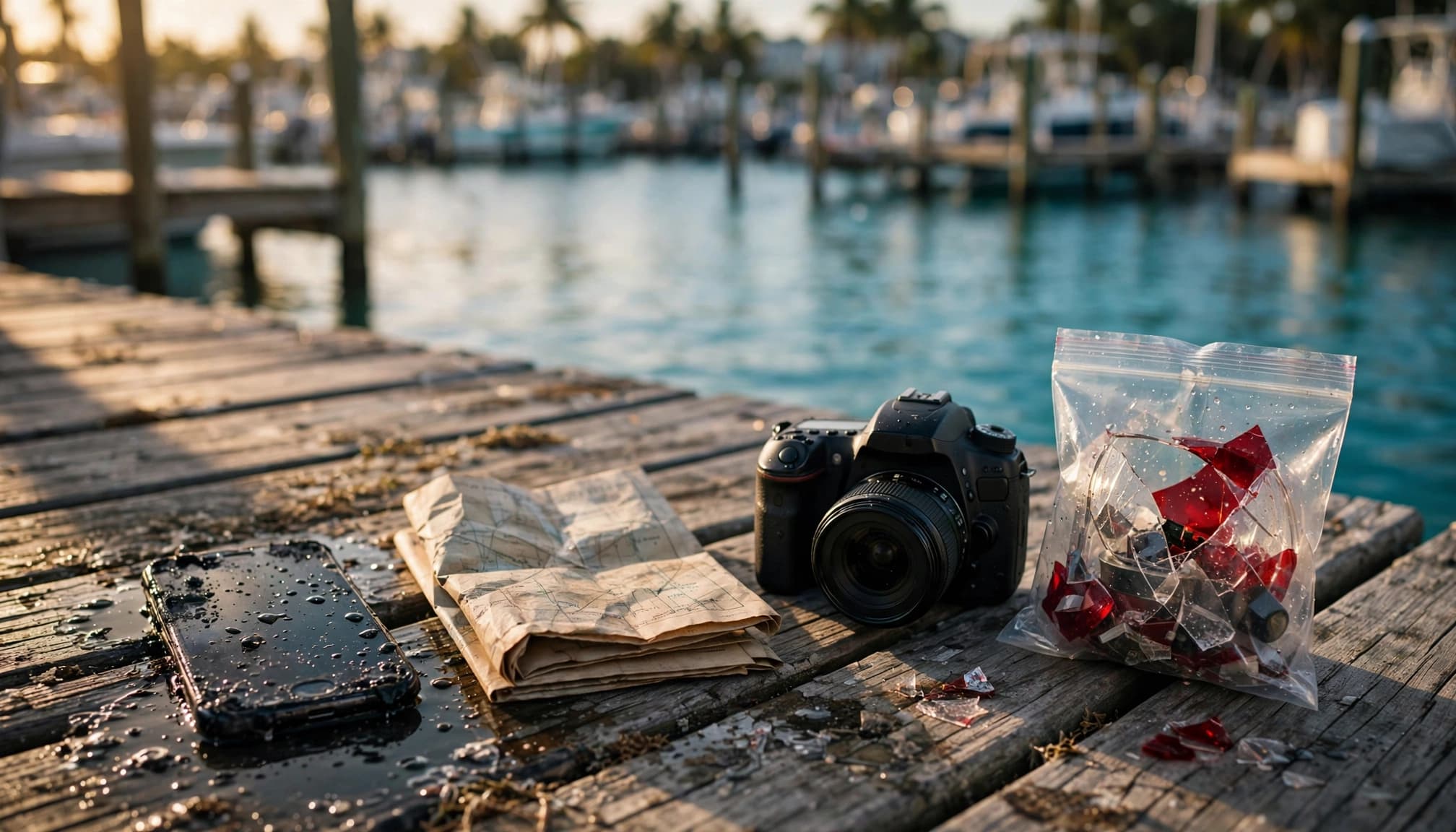
We look for GPS tracks, chartplotter information, available video, and witness observations. For equipped vessels, electronic records may help establish course and speed. Not every recreational boat carries or retains the same data.
Marina surveillance can also show departure times, visible equipment conditions, or who operated the boat. Because systems may overwrite recordings, early preservation requests matter.
Medical records must connect the collision to your injuries. Tell your providers about impacts, time underwater, and symptoms that develop afterward. Keep appointment records, prescriptions, and work restrictions.
For a collision near Delray Beach or along Broward County’s waterways, record the precise location. A bridge name, marina, inlet, or GPS coordinate is more useful than “somewhere on the Intracoastal.”
Preserve original files before editing or posting them. Their timestamps and other stored information can help establish when and where the collision occurred.
Does Maritime Law Change Your Claim or Deadline?
Federal maritime law can change the rules governing liability, compensation, and filing deadlines. A collision’s location matters, but it doesn’t answer every jurisdiction question.
Navigable Waters and Shared Fault
Collisions on navigable waters connected to maritime activity may fall under federal maritime law. An incident on an isolated inland lake may require a different analysis.
Florida Sea Grant describes the overlapping authority over Florida waterways. Federal, state, and local rules can affect boating operations.
Shared fault also requires care. Florida Statute § 768.81 generally reduces damages by your percentage of responsibility and bars recovery when you are more than 50% at fault. Maritime comparative-fault rules can differ, so we don’t automatically apply Florida’s threshold to an admiralty claim.
Filing Deadlines, Statute of Limitations, and Earlier Notice Requirements
Under 46 U.S.C. § 30106, the maritime statute of limitations for personal injury and death actions is generally three years, unless another law provides otherwise. The provision appears in the federal Title 46 shipping laws.
Don’t assume that statute of limitations applies to every South Florida collision. State-law claims, government defendants, and passenger contracts may require a different analysis.
An insurance notice deadline is also separate from a lawsuit deadline. Bring us the accident date, any date of death, passenger documents, and insurer letters. Negotiations generally don’t pause the filing clock.
What Insurance May Cover a Boating Collision?
Coverage depends on the actual policies, the insured parties, and how the vessel was being used. A boat owner’s assurance that “insurance will handle it” isn’t enough. A policy review may also need to consider product liability if a defective product contributed to the collision.
Insurance may be one potential source of financial compensation, depending on the policy.
| Coverage Source | What Needs Review |
|---|---|
| Watercraft liability insurance | Covered operators, policy limits, exclusions, and the vessel’s permitted use |
| Rental or commercial marine policies | The insured business, rental terms, and coverage for the activity involved |
| Your own boat policy | Medical payments or uninsured-boater benefits, if purchased and applicable |
The practical takeaway is to collect policy information early, including liability insurance details, without assuming coverage exists.
Under Florida Statute § 327.54, qualifying rental operations must carry insurance with minimum limits of $500,000 per person and $1 million per event for specified operation-related exposure. Those limits don’t prove that a particular claimant, accident, or loss is covered.
Homeowners insurance may restrict watercraft coverage. Likewise, an auto uninsured-motorist policy doesn’t automatically cover a boat collision.
Notify your own insurer as required, but avoid guessing about fault. Before giving another party’s insurer a recorded statement, get advice about your obligations. We also review proposed releases because a settlement may end your ability to seek additional compensation.
What Compensation Can an Injured Person or Family Seek?
The financial compensation available depends on documented losses, available coverage, governing law, and proof of responsibility. There isn’t a reliable average settlement that predicts your boating accident claim.
Medical Expenses, Income Loss, and Daily Limitations
An injury claim may include emergency treatment, surgery, rehabilitation, future medical care, and lost wages. Lasting injuries can also affect earning capacity.
Pain and suffering may be recoverable under the applicable law. We document concrete changes, including sleep disruption, reduced mobility, and difficulty caring for your children.
Keep bills, wage records, and receipts for injury-related expenses. A brief journal can record your recovery without exaggeration. Property damage may involve a separate claim or insurance process.
Fatal Collisions and Family Claims
When a collision causes death, eligible claimants, remedies, and financial compensation depend on governing law. A Florida wrongful death claim and maritime death remedies aren’t interchangeable.
Our work on Florida wrongful death claims includes investigating causation, financial losses, and the family’s rights.
Offshore deaths can raise additional questions under the Death on the High Seas Act. Families should get an individual review before assuming which benefits are available or who can bring the action.
Frequently Asked Questions About Boating Collisions
Can You File a Claim After a Rental Boat Accident?
Yes, a rental arrangement doesn’t automatically prevent a claim. The operator, rental company, or another party may bear responsibility.
However, waivers, maintenance records, required instruction, and insurance terms need review. Save your booking confirmation, rental agreement, receipts, and any safety materials you received. These documents can help establish who supplied the vessel and what instructions accompanied the rental.
Can You Pursue a Claim Against a Friend?
Yes, a friend’s negligence can support an injury claim. Depending on coverage, an insurer may handle the demand and defense.
We understand the personal discomfort involved. Reviewing the policy and facts helps you understand the options before deciding how to proceed. You don’t need to argue with your friend about liability while you’re recovering.
What Should You Bring to a Free Consultation?
Bring medical records, photos, witness contacts, the incident number, insurance letters, and rental or passenger documents. Also include the accident date and location.
If you don’t have everything, don’t delay the call. We can identify missing records and discuss preservation steps. The consultation can help you understand your options for legal representation. After reviewing liability, damages, and coverage, we can discuss potential financial compensation.
Get Help Before Evidence Disappears
Boating accident claims depend on timely evidence and the correct legal rules. You shouldn’t have to manage insurance pressure while recovering from a collision.
At Lyons & Snyder, we serve Coral Springs, Parkland, Plantation, Delray Beach, Vero Beach, Key West, and the broader South Florida area. Since 2008, our attorneys have litigated personal injury cases and provided legal representation with trial preparation in mind.
Call 954-462-8035 for a free consultation. We offer No Recovery No Fee representation through a contingency fee arrangement, with terms explained before you hire us. Hablamos Español.
This content is for informational purposes only and isn’t a substitute for legal counsel. An attorney must review your circumstances to determine your rights and deadlines.