
Florida E-Bike Accident Claims: Why Classification Matters
Your e-bike’s legal classification affects which riding rules apply, which insurance policies may pay, and how an insurer evaluates your injuries. You can pursue compensation when someone else’s negligence caused your crash, but Florida e-bike accident claims require careful coverage analysis.
A bicycle-looking machine isn’t always legally an electric bicycle. We start with its pedals, motor power, and assisted-speed settings because those details can change your claim.
Last Updated: October 2026
Contents: E-bike classification, insurance coverage, PIP, shared fault, liability, evidence, filing deadlines, and frequently asked questions.
Key Takeaways
- A qualifying Florida e-bike has working pedals, a seat, and a motor under 750 watts.
- Being hit by a car doesn’t automatically establish PIP eligibility, and the driver’s insurance may exclude bodily injury coverage.
- Preserve the bike and digital evidence early. Most current negligence claims have a two-year lawsuit deadline.
How Does Florida Classify an E-Bike?
Florida recognizes three electric bicycle classes. Each requires fully operable pedals, a seat or saddle, and an electric motor rated at less than 750 watts.
What Are the Three Classes?
The classes depend on how the motor assists the rider.
| Class | Motor Assistance | Assistance Cutoff |
|---|---|---|
| Class 1 | Only while pedaling | 20 mph |
| Class 2 | Can propel the bicycle without pedaling | 20 mph |
| Class 3 | Only while pedaling | 28 mph |
These are motor-assistance limits, not proof of the bicycle’s actual speed during a crash.
Under Florida e-bike laws, qualifying e-bikes generally receive bicycle rights and duties under Florida’s electric bicycle regulations. They don’t require a driver’s license or vehicle registration.
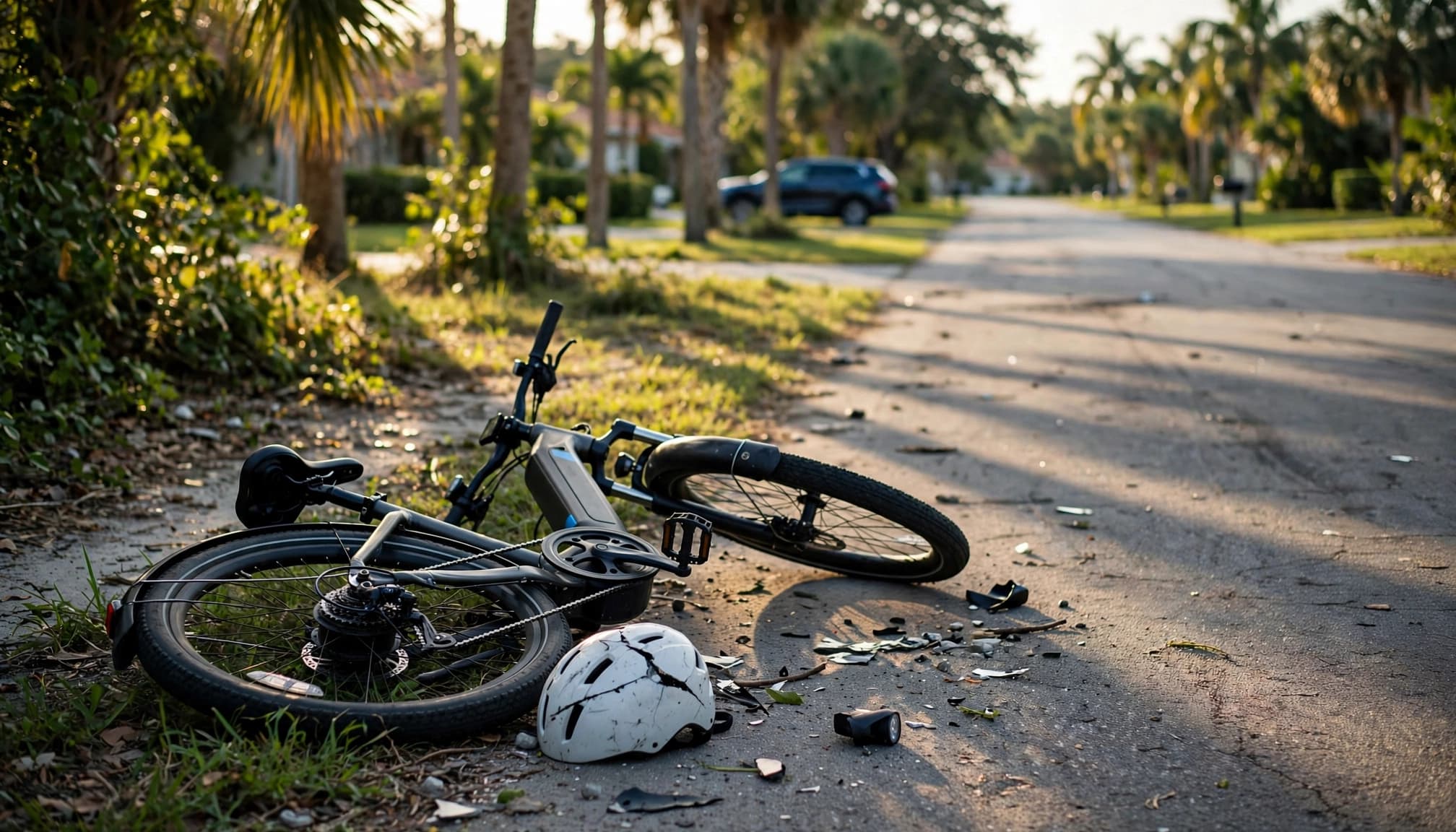
When Does an “E-Bike” Fall Outside Those Classes?
A machine without working pedals, with excessive motor power, or with assistance beyond the statutory limits may fall outside Florida’s e-bike definition. A machine capable of motor-powered travel at 70 mph isn’t a qualifying e-bike.
A device marketed as an e-scooter doesn’t automatically qualify as an e-bike. Its specifications and applicable legal category must be evaluated separately.
Depending on its specifications, it may fall under moped or motorcycle rules, or lack eligibility for public-road use. License, registration, helmet, and insurance requirements can change.
We preserve the manufacturer’s label, purchase records, controller settings, and modification history. A retailer’s description doesn’t settle classification. Even an unlawful modification doesn’t automatically prove that you caused the collision.
Which Insurance Can Pay After an E-Bike Crash?
Several policies may respond, but they cover different losses. Florida generally requires private passenger vehicles to carry $10,000 in PIP and $10,000 in property damage liability coverage. Those minimums aren’t comprehensive protection.
Florida generally doesn’t require ordinary private drivers to carry bodily injury liability insurance. Therefore, a driver can satisfy the usual minimum requirements without insurance that pays your injury claim.
The main coverage possibilities are:
| Coverage | Potential Role | Important Limitation |
|---|---|---|
| Driver’s bodily injury liability | Pays covered injuries caused by the driver | May be absent or insufficient |
| Your uninsured motorist coverage (UM/UIM) | Covers qualifying uninsured or underinsured motorist injuries | Insured status and policy exclusions affect whether coverage applies |
| PIP | Pays qualifying medical expenses and wage losses | E-bike eligibility isn’t automatic |
| MedPay or health insurance | Helps with covered medical expenses | Limits, exclusions, and reimbursement rights apply |
| Homeowners or renters liability | May cover a rider who injures someone | Motorized-vehicle exclusions may apply |
Property damage liability can address bicycle damage, but it doesn’t pay your medical bills.
Our explanation of UM coverage for injured cyclists explains why health insurance doesn’t replace protection for lost income and pain and suffering.
How Do PIP and the First 14 Days Affect Coverage?
PIP isn’t insurance automatically attached to an e-bike. However, a motor vehicle collision can create potential eligibility under an applicable auto policy.
When Can PIP Apply?
Personal injury protection (PIP) may cover a rider struck by a car, depending on insured status, statutory definitions, and policy terms. An e-bike’s self-propelled features can complicate that analysis. A solo fall generally doesn’t trigger auto PIP merely because you own a car.
When PIP applies, initial medical services must occur within 14 days. It generally pays 80% of qualifying medical expenses and 60% of lost income, subject to combined limits, deductibles, and emergency-medical-condition rules.
Seek care promptly rather than treating day 14 as a recommended appointment date.
How Do Multiple Policies Work Together?
For an uninsured-driver collision, we evaluate potentially applicable PIP and MedPay alongside health coverage and UM/UIM. Medical coverage can address treatment while a liability or UM claim addresses other compensable losses.
Payments must be coordinated. You can’t collect twice for the same expense, and insurers or benefit plans may assert reimbursement rights. Also, settling with the driver before addressing UM consent requirements can jeopardize additional coverage.
Can Shared Fault Reduce an E-Bike Injury Claim?
Yes. Florida’s modified comparative negligence rule reduces damages by your percentage of responsibility and generally bars recovery when you’re more than 50% at fault. Florida adopted this change in 2023.
How Does the Percentage Affect Compensation?
On $100,000 in proven damages, a 20% fault allocation reduces recovery to $80,000 before other adjustments. At exactly 50%, recovery remains possible; above 50%, the modified rule bars recovery.
Insurers may dispute speed, visibility, signals, or right of way. We compare those allegations against video, physical evidence, and witness accounts. A traffic violation must connect to the collision or injury, rather than merely provide a reason to criticize the rider.
Does Riding Without a Helmet Count Against You?
For qualifying bicycles and e-bikes, Florida requires helmets for riders and passengers under 16. Section 316.2065 prohibits treating failure to wear a bicycle helmet as evidence of negligence or contributory negligence.
That protection doesn’t erase unrelated conduct, such as entering against a signal. Also, municipalities can regulate certain sidewalk and path use. The rules at the crash location matter, whether you’re riding in Coral Springs, Delray Beach, or Key West.
Who Can Be Liable, and What Damages Are Available?
A negligent motorist may owe compensation for speeding, distracted or impaired driving, failing to yield, or turning across your path. An employer may also be responsible when its employee causes a crash within the scope of employment.
Other claims require different proof. An e-bike manufacturer may face product liability allegations involving defective brakes, throttles, frames, or batteries. Poor maintenance by rental companies may contribute to a crash. A property owner’s unsafe premises may also play a role.
Government responsibility can involve potholes, malfunctioning signals, or bike lane conditions. However, immunity and discretionary-design defenses can restrict those cases.
Our bicycle accident representation includes evaluating responsible parties rather than stopping with the driver’s insurance.
Recoverable damages can include past and future medical bills, lost wages, reduced earning capacity, pain and suffering, and lost enjoyment of life. Applicable injury-threshold requirements may affect noneconomic damages in motor vehicle claims.
Medical records documenting injuries, including traumatic brain injuries, can help establish the nature and extent of a rider’s losses. Research published in Injury Prevention found greater hospitalization likelihood among e-bike riders than conventional cyclists. Higher speeds can increase impact forces, but an individual claim still depends on documented injuries and medical evidence.
What Evidence Should You Preserve Immediately?
Preserve evidence showing both what happened and what the machine was. National Bicycle Dealers Association estimates put U.S. e-bike sales at approximately 804,000 in 2021, compared with 152,000 in 2016. Models and modifications vary, so the actual bicycle matters.
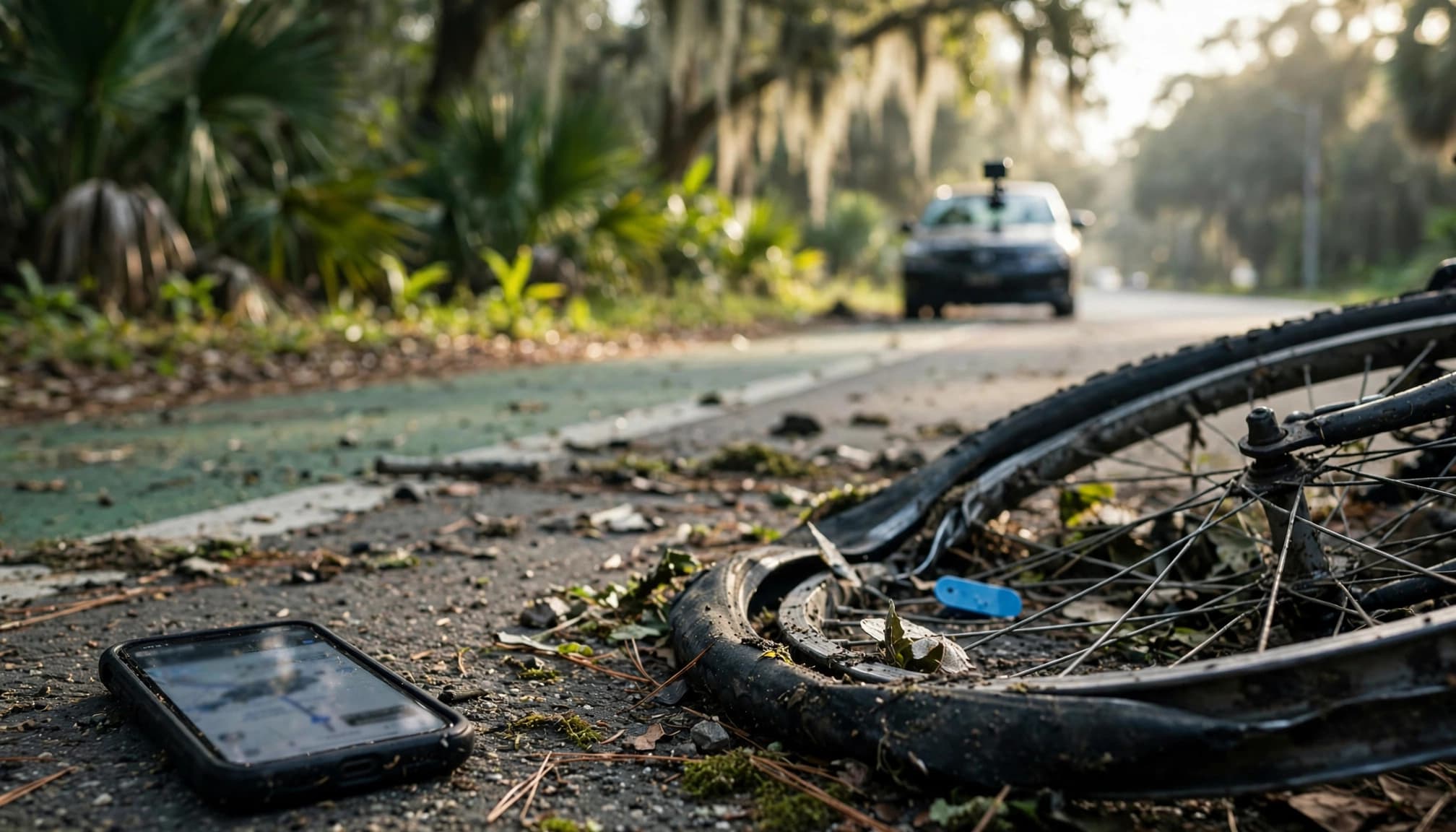
- Call 911 and obtain medical care. Preserve the crash report, 911 recording, witness contacts, and photographs of injuries and road conditions.
- Keep the bicycle, battery, helmet, and damaged clothing. Don’t repair, discard, reset, or modify the bicycle before inspection.
- Save ride-app, GPS, fitness-tracker, and controller data. Retain purchase documents and photographs of identifying labels.
- Request preservation of dashcam, doorbell, business, transit-camera, and commercial telematics evidence quickly. Recordings can disappear through routine overwriting.
- Keep medical records, receipts, wage documentation, and notes describing activity restrictions.
Don’t handle a damaged lithium battery if it presents a fire risk. Tell emergency responders about heat, smoke, or swelling.
How Long Do You Have to File a Claim?
Most Florida negligence claims arising from crashes on or after March 24, 2023, must be filed within two years of the crash under the statute of limitations. File an e-bike accident lawsuit before that deadline. Wrongful death lawsuits generally have a two-year deadline measured from death.
Exceptions and different claim types can change the analysis. Insurance negotiations don’t automatically pause the lawsuit deadline. Our guide to Florida injury claim deadlines explains the distinction.
Claims involving government entities have separate notice requirements under Section 768.28(6). Formal written notice generally must reach the appropriate agency and, when required, the Department of Financial Services before suit. Notice is generally due within three years, or two years for wrongful death, with additional waiting-period requirements.
Section 768.28 generally limits government payments without further legislative action to $200,000 per person and $300,000 per incident. Government limitation periods and exceptions require separate analysis. Don’t assume the ordinary negligence deadline controls every government claim.
Frequently Asked Questions
Should You Give an Insurer a Recorded Statement?
You generally don’t need to give the other driver’s insurer an immediate recorded statement. Provide accurate identifying information, but don’t guess about speed, fault, or your medical prognosis.
Your own insurer may have contractual cooperation requirements. We can address those obligations without treating every adjuster’s request as mandatory.
Can You Sue if a Driver Says Your E-Bike Was Illegal?
Yes, a classification dispute doesn’t automatically eliminate a negligence claim. The driver must still answer for conduct that caused the collision.
However, classification can affect riding rules, coverage exclusions, and fault arguments. Preserve the bike’s original condition so those questions can be evaluated with evidence rather than assumptions.
Protect the Evidence Before Accepting a Settlement
Classification is an early step in an e-bike claim, but it doesn’t decide responsibility by itself. We connect the bicycle’s specifications with the crash evidence, available insurance, and documented losses.
At Lyons & Snyder, we help injured riders across South Florida understand their options. Call 954-462-8035 for a free consultation. No Recovery No Fee. Hablamos Español.
This content is for informational purposes only and isn’t a substitute for legal counsel.